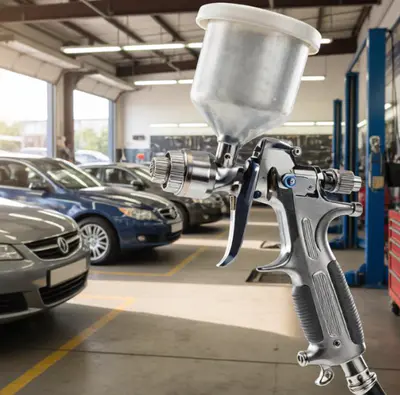
Two litres of enamel, a gravity-fed gun and a 1.3 mm fluid tip: pull the trigger and you either get...
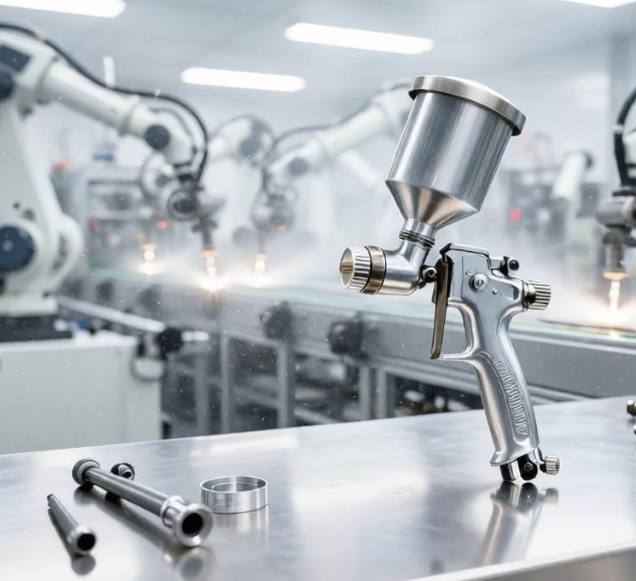
A furniture workshop replaced its worn suction gun with a new 1.4 mm gravity model and immediately ...
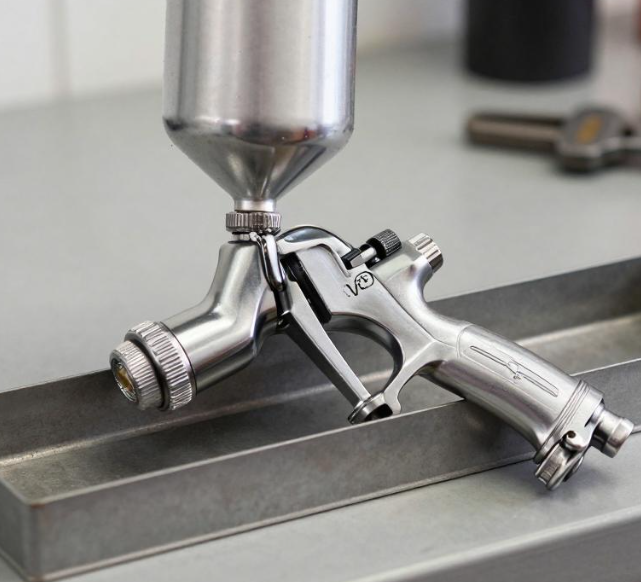
You have a new HVLP gun in your hands, a cup of fresh paint, and a surface you would rather not rep...
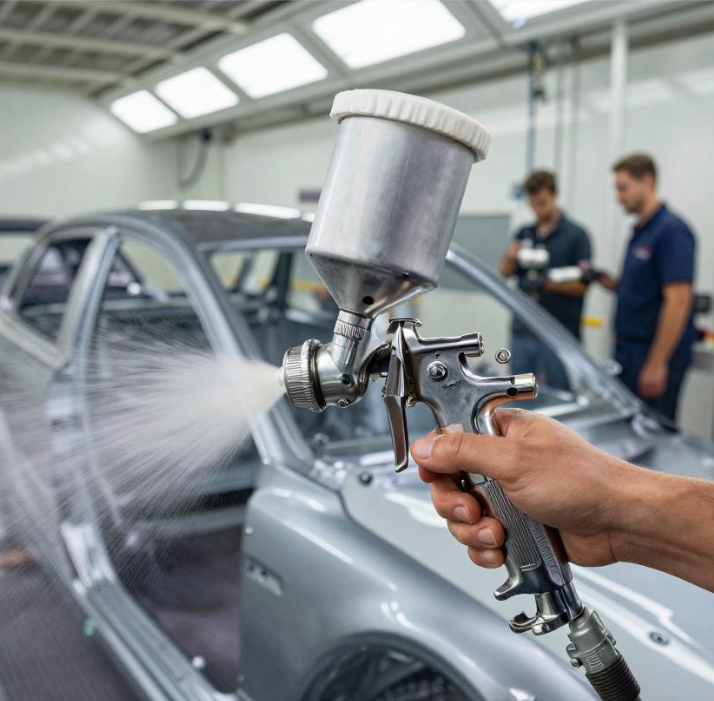
You have just hung the masking paper, mixed the paint, and pressed the trigger on a spray gun for t...
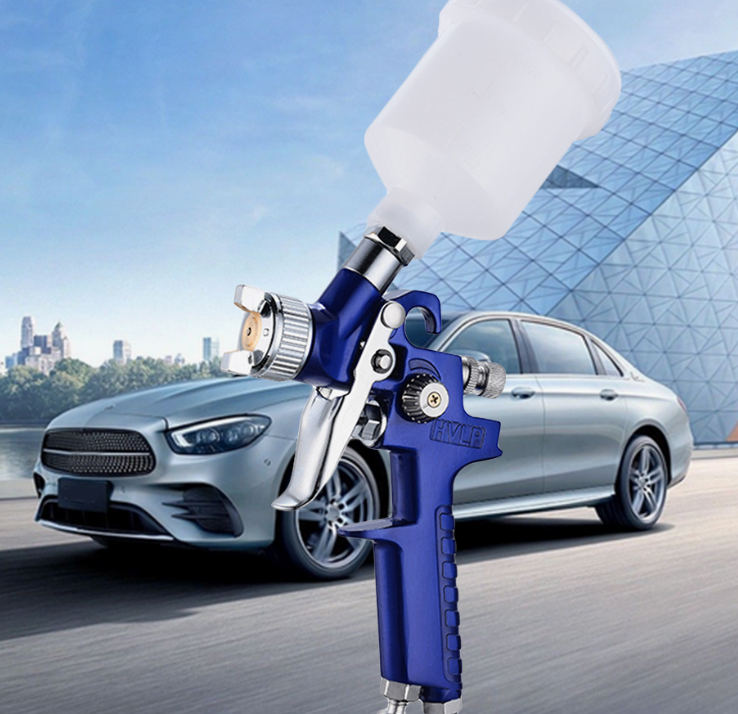
You set the air pressure, opened the fluid knob halfway, and pulled the trigger—then the gun spatte...

Your spray gun spits, the film sags, and the surface comes out with the telltale orange-peel textur...
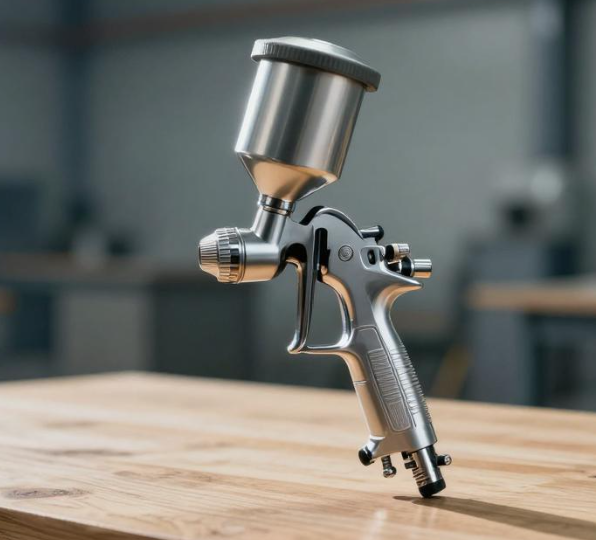
The same gun, the same paint, the same painter: one cabinet door comes out glass-smooth, and the ne...
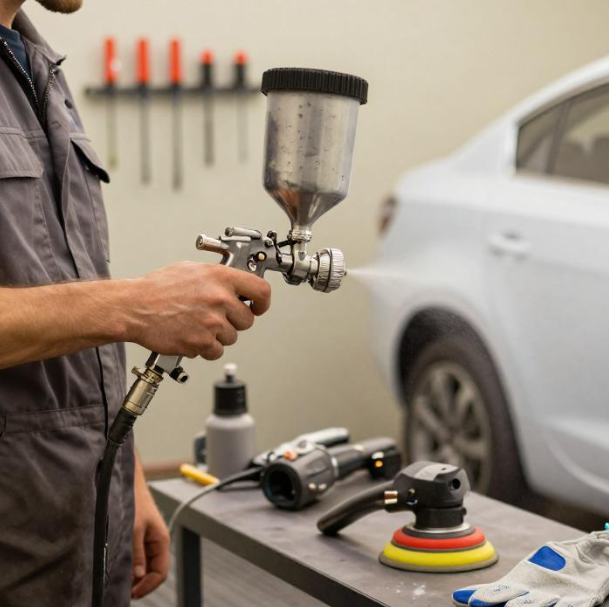
A clean steel panel, a properly reduced coat of paint, and a brand new spray gun. By the numbers, t...
Two litres of enamel, a gravity-fed gun and a 1.3 mm fluid tip: pull the trigger and you either get a wet, glassy coat or a dry, sandy mist. The gun is rarely the reason. The mix is. Bring the paint to the right viscosity before it reaches the air cap and most classic spraying faults simply stop ha...
A furniture workshop replaced its worn suction gun with a new 1.4 mm gravity model and immediately got worse results: the sanding sealer sprayed dry and gritty, while the same gun laid lacquer down perfectly. Nothing was wrong with the tool. The fluid nozzle was simply too small for a sealer that m...
You have a new HVLP gun in your hands, a cup of fresh paint, and a surface you would rather not repaint. The first pass usually looks fine, but the second pass can quickly turn into runs, sags, and dry, dusty patches near the edges. If that sounds familiar, the gun itself is rarely the problem. Her...
Fax: +86-574-88068788
Add: Hengxi Industrial Zone, Yinzhou, Borough, Ningbo, China, 315131

Copyright © 2021 Ningbo Lis Industrial Co., Ltd. Login Paint Spray Guns Suppliers

 Search

 English
 中文简体
 Deutsch
 Español
