 Search
 English
 中文简体
中文简体 Deutsch
 Español
Content
- 1 Setting Spray Gun Pressure Starts With Matching PSI to Your Gun Type
- 2 Common Spray Gun Types and Why Their Pressure Needs Differ
- 3 Step by Step Process for Setting Spray Gun Pressure
- 4 Diagnosing Spray Pattern Problems Caused by Incorrect Pressure
- 5 Adjusting Paint Gun Pressure Settings for Different Material Viscosity
- 6 Comparing Spray Gun Types Across Key Performance Factors
- 7 Spray Gun Regulator and Air Source Considerations
- 8 Why Overspray Increases When Air Pressure Runs Too High
- 9 Industries and Applications That Rely on Spray Gun Equipment
- 10 Spray Gun Lifespan and Replacing Wear Parts
- 11 Manufacturing Background Behind Reliable Spray Gun Equipment
- 12 Frequently Asked Questions About Spray Guns
Setting Spray Gun Pressure Starts With Matching PSI to Your Gun Type
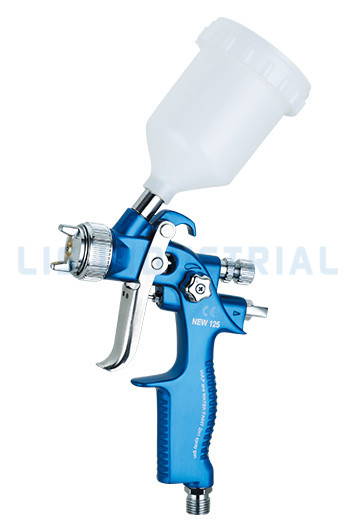
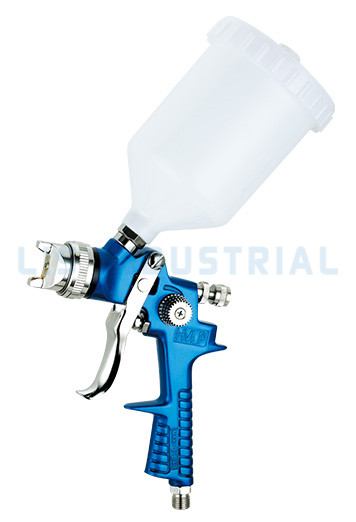
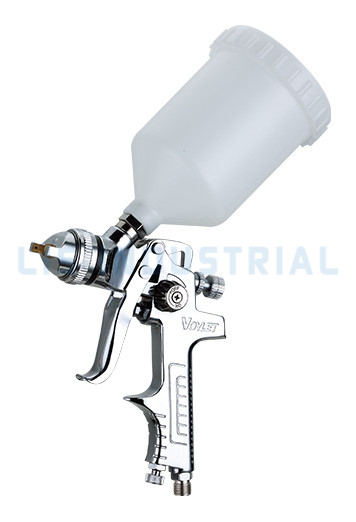
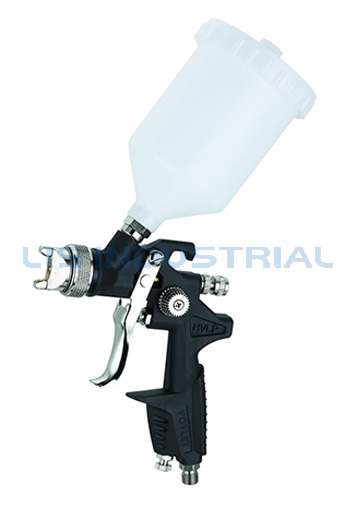
The correct spray gun pressure depends on which atomization technology the gun uses, since each type is designed around a different air or fluid pressure range. An HVLP gun, often sold as a high volume low pressure paint sprayer, is generally regulated to around 10 psi or less measured at the air cap, even though the inlet pressure at the regulator is often set closer to 28 psi to make up for pressure lost through the hose and internal passages. A conventional spray gun typically runs between 40 and 65 psi at the gun inlet, an LVLP unit sits close to HVLP cap pressure but needs less inlet pressure and lower air volume overall, and an airless sprayer is not set by atomizing air at all, instead working from fluid pressure that commonly falls between 1500 and 3000 psi.
Beyond the gun type itself, the right paint spray gun pressure setting also depends on coating viscosity, tip or nozzle size, and the material being applied, all of which are covered in detail further down this guide along with reference charts for each factor.
Common Spray Gun Types and Why Their Pressure Needs Differ
Every spray gun machine on the market falls into one of a small number of atomization categories, and knowing which category a given air paint gun belongs to is the fastest way to find its correct working pressure.
Typical Spray Gun Pressure for Painting by Atomization Type
| Reference working pressure ranges by spray gun atomization type, figures vary by brand and tip combination | |||
| Gun Type | Pressure Metric | Typical Working Range | Best Suited For |
| HVLP | Air pressure at cap | Around 10 psi or less | Fine finish work, furniture, automotive topcoats |
| LVLP | Air pressure at cap | Similar to HVLP, lower air volume | Smaller compressors, touch-up and detail work |
| Conventional | Inlet air pressure | 40 to 65 psi | Heavier coatings, faster production spraying |
| Airless | Fluid pressure | 1500 to 3000 psi | Large surfaces, high build coatings, fences and siding |
| Air-assisted airless | Fluid plus light air assist | 500 to 1200 psi fluid, low air assist | Cabinet and furniture finishing needing finer atomization |
Feed Methods: Gravity, Pressure, and Suction
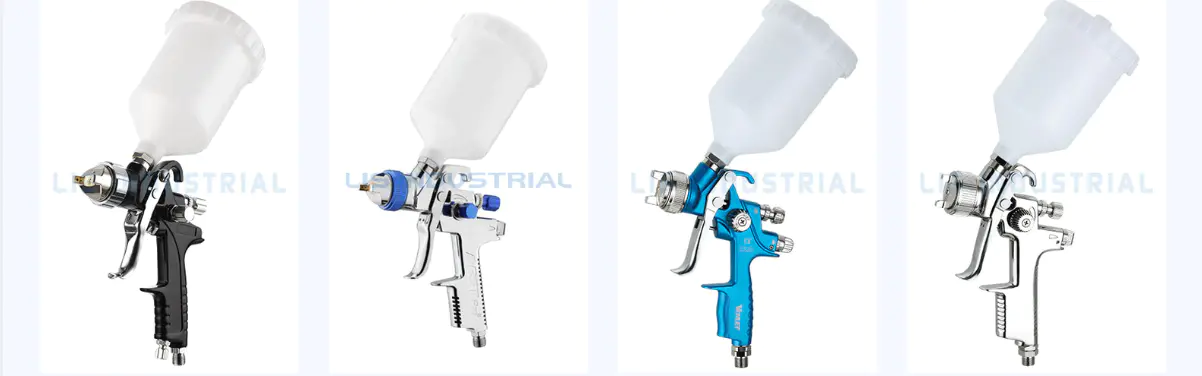
Separate from atomization type, a spray gun is also described by how paint reaches it. This distinction matters when reading product listings for a paint spray gun, since two guns of the same atomization type can still differ in how the cup or pot feeds material into the fluid passage.
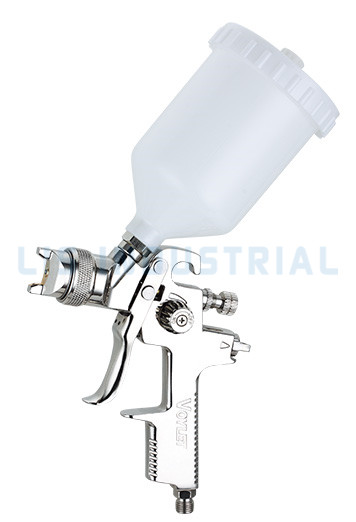
- Gravity feed uses a cup mounted on top of the gun, letting material drop into the fluid passage under its own weight, common on smaller detail and touch-up guns.
- Pressure feed draws from a separate pressure pot spray gun setup or remote tank, pushing material through a hose using regulated air, suited to continuous high volume work.
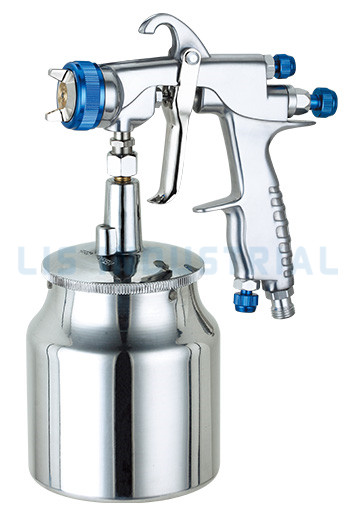
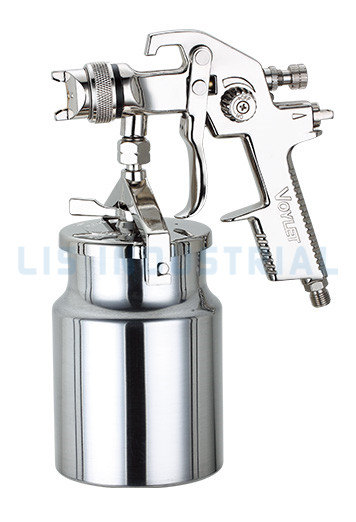
- Suction feed mounts the cup below the gun and relies on airflow across the fluid nozzle to draw material upward, generally limited to lighter viscosity coatings.
Step by Step Process for Setting Spray Gun Pressure
Following a consistent sequence removes most of the guesswork from setting air pressure for spray painting, whether the job involves a small touch-up or a full panel refinish.
- Check the gun manufacturer's recommended inlet and cap pressure for the specific gun and tip combination being used.
- Set the compressor regulator or the spray gun regulator to the recommended inlet figure before connecting the hose to the gun.
- Spray a test pattern onto cardboard or masking paper held at the typical working distance for the coating being applied.
- Examine the test pattern for tails at the top or bottom, a heavy wet middle, or a visible cloud of overspray around the edges.
- Adjust pressure in small increments, roughly 2 to 3 psi at a time, retesting the pattern after each change.
- Fine tune the fan width and fluid control knobs once the base pressure produces an even pattern with no tails.
- Recheck the setting at the actual working distance and material temperature, since viscosity shifts with temperature and can change the result.
Diagnosing Spray Pattern Problems Caused by Incorrect Pressure
Most pattern defects trace back to pressure being set too high or too low for the material and tip in use, which makes this table a useful quick reference during setup.
| Common spray pattern defects and the pressure adjustment that typically resolves each one | ||
| Symptom | Likely Cause | Suggested Adjustment |
| Dry, dusty, or textured finish | Air pressure set too high for the material | Lower pressure a few psi and retest |
| Heavy wet edges, tails, or runs | Air pressure set too low, or tip too large | Raise pressure slightly or confirm correct tip size |
| Heavy middle with thin edges | Pressure too low relative to fluid viscosity | Increase pressure or thin the material within guidelines |
| Visible fog or excess overspray | Air pressure set too high, atomizing too fine | Reduce pressure and check air volume at the compressor |
| Speckled or spotty coverage | Pressure too low or fluid tip undersized | Raise pressure moderately or switch to a larger tip |
Adjusting Paint Gun Pressure Settings for Different Material Viscosity
Thin materials such as stains and dyes flow easily and generally need less psi for paint gun settings, while heavier coatings resist atomization and call for more pressure or a larger fluid tip. Spraying latex paint is a common point of confusion, since latex is noticeably thicker than most solvent based finishes. A latex spray gun setup usually needs the material thinned according to label guidance, a larger tip opening, and pressure toward the higher end of the gun's rated range to break the coating into a fine, even mist rather than heavy droplets.
Comparing Spray Gun Types Across Key Performance Factors
Pressure setting is only one part of the picture. Transfer efficiency, atomization fineness, overspray control, and how well a gun handles heavier material all shift depending on which spray gun type is chosen for the job.
Spray Gun Regulator and Air Source Considerations
An accurate gauge matters as much as the pressure figure itself. A spray gun regulator mounted at the gun handle reads pressure closer to the point of use than a gauge sitting back at the compressor, which reduces the error caused by pressure drop across a long hose. For continuous, high volume work, a pressure pot spray gun arrangement keeps material supply steady without needing to stop and refill a small gravity cup, which is one reason pressure feed setups remain common in production coating environments.
Compressor output also needs to match what the gun demands, measured in cubic feet per minute rather than psi alone. An HVLP or LVLP low pressure paint sprayer can still require a meaningful volume of air even though its cap pressure is low, so pairing a high air consumption gun with an undersized compressor often shows up as inconsistent pressure during longer spray passes rather than as a simple pressure reading error.
Why Overspray Increases When Air Pressure Runs Too High
Raising air pressure beyond a coating's optimal atomization point breaks the fluid into finer droplets than needed, and those very fine droplets are more easily carried away from the target surface by turbulence around the gun. The result is a steady rise in material lost to overspray rather than landing on the part, illustrated in the chart below.
Industries and Applications That Rely on Spray Gun Equipment
A paint spray gun shows up across a wide range of production and finishing environments, each with its own typical pressure habits and coating types.
- Automotive refinishing and OEM paint lines, where HVLP guns are common for topcoats and clearcoats.
- Furniture finishing, where LVLP and HVLP guns help control overspray on stains, lacquers, and clear finishes.
- Metal fabrication shops applying primers and protective coatings to fabricated parts before assembly.
- Aerospace component finishing, where controlled film thickness and consistent atomization matter for coating uniformity.
- Marine coating work, including hull and deck finishes that need durable, evenly applied protective layers.
- Construction projects using conventional or airless equipment for larger surface areas such as walls and fencing.
- Industrial coating lines that rely on pressure feed systems for consistent, repeatable results across high volume runs.
Spray Gun Lifespan and Replacing Wear Parts
A well maintained spray gun can remain in service for years, but how long any individual unit lasts depends heavily on cleaning habits, the materials sprayed through it, and how often it sees use. Needles, fluid tips, seals, and gaskets are considered normal wear items on nearly every gun design, and replacing them as they wear is a routine part of ownership rather than a sign of a defective unit.
- Clean the gun immediately after each use, since dried material inside the fluid passage is the most common cause of clogging and pattern distortion.
- Inspect the needle and fluid tip for grooves or wear whenever the pattern becomes inconsistent despite correct pressure.
- Replace seals and packings if fluid leaks around the needle packing nut or if air leaks past the trigger valve.
- Store the gun with the air cap and fluid nozzle protected from dust and impact damage between jobs.
Manufacturing Background Behind Reliable Spray Gun Equipment
Ningbo Lis Industrial Co., Ltd has produced spray gun equipment for home and industrial use since 1984, supporting both original design manufacturing built from customer drawings or samples and original brand manufacturing developed around customer requirements. The company maintains an in house research and development team alongside a production process that includes incoming material inspection, in process quality checks at each production stage, and complete functional testing of finished units before they leave the factory.
Over time, this manufacturing base has built a distribution network reaching customers across Europe, North America, the Middle East, South Africa, and East Asia, supporting both standard catalog spray gun models and customizable configurations built around a specific application.
Frequently Asked Questions About Spray Guns
|
Q1: What Is a Spray Gun A spray gun is a handheld or automated tool that atomizes liquid material, such as paint or coating, into a fine mist and directs it onto a surface using compressed air or fluid pressure. |
Q2: How Does a Spray Gun Work Material is drawn or pushed through a fluid nozzle while compressed air or high fluid pressure breaks it into small droplets, which are then shaped into a controlled fan pattern as they leave the gun. |
|
Q3: What Are the Different Types of Spray Guns The main categories include HVLP, LVLP, conventional, airless, air-assisted airless, along with feed methods such as gravity feed, pressure feed, and suction feed. |
Q4: What Is the Difference Between HVLP and LVLP Spray Guns Both operate at similar low cap pressure, but an LVLP gun uses less overall air volume, making it workable with smaller compressors compared with a typical HVLP setup. |
|
Q5: What Industries Use Spray Guns Common industries include automotive, furniture, metal fabrication, aerospace, marine, construction, and industrial coating operations. |
Q6: How Do I Choose the Right Spray Gun Match the gun to the coating viscosity, the surface area being covered, and the available air supply, since these three factors narrow down atomization type and tip size quickly. |
|
Q7: What Nozzle Size Should I Use Thinner coatings generally pair with a smaller fluid tip while thicker or higher build coatings need a larger tip, with the exact size depending on the manufacturer's chart for that gun. |
Q8: What Air Pressure Is Required for a Spray Gun It depends on the gun type, with HVLP and LVLP guns commonly regulated near 10 psi at the cap and conventional guns typically running between 40 and 65 psi at the inlet. |
|
Q9: How Long Does a Spray Gun Last Service life varies widely with use and care, but consistent cleaning after every session and timely replacement of wear parts are the biggest factors in how long a gun stays reliable. |
Q10: Can Spray Gun Parts Be Replaced Yes, needles, fluid tips, seals, gaskets, and air caps are typically available as individual replacement parts rather than requiring a full gun replacement. |