 Search
 English
 中文简体
中文简体 Deutsch
 Español
Content
- 1 The Short Answer: Eight Mistakes That Ruin an HVLP Spray Gun Purchase
- 2 Mistake 1: Confusing HVLP With Conventional Spray Guns
- 3 Mistake 2: Choosing the Wrong Feed Type for the Job
- 4 Mistake 3: Ignoring Compressor CFM and Air Pressure Requirements
- 5 Mistake 4: Picking the Wrong Nozzle Tip Size for the Coating
- 6 Mistake 5: Underestimating Fluid Cup Capacity and Ergonomics
- 7 Mistake 6: Overlooking Gun Body Material and Build Quality
- 8 Mistake 7: Neglecting Maintenance and Spare Parts Availability
- 9 Mistake 8: Skipping a Check on Manufacturer Support and OEM Capability
- 10 About Ningbo Lis Industrial Co., Ltd
- 11 Frequently Asked Questions
The Short Answer: Eight Mistakes That Ruin an HVLP Spray Gun Purchase
Most disappointing spray finishes trace back to a handful of avoidable choices made before the trigger is ever pulled. Buyers commonly run into trouble with eight recurring mistakes: confusing HVLP with conventional spray guns, picking the wrong feed type, ignoring compressor CFM and air pressure needs, choosing the wrong nozzle tip size, underestimating fluid cup capacity and ergonomics, overlooking gun body material and build quality, neglecting maintenance and spare parts availability, and skipping a check on manufacturer support and customization options. Avoiding these eight issues is usually enough to turn a frustrating first week with a new HVLP spray gun into a smooth, repeatable finishing process.
The table below gives a quick overview of each mistake before the article walks through the details, data points, and comparison charts behind them.
| Table 1: Eight mistakes to avoid before buying an HVLP spray gun | ||
| Mistake | What Goes Wrong | Practical Fix |
| 1. Confusing HVLP with conventional guns | Buyer expects identical setup and results | Understand the transfer efficiency difference first |
| 2. Wrong feed type | Gravity, suction, or pressure feed mismatched to the job | Match feed type to material volume and gun angle needs |
| 3. Ignoring compressor requirements | Compressor cannot sustain required air volume | Check CFM at the gun inlet, not just tank size |
| 4. Wrong nozzle tip size | Coating too thin, too thick, or textured for the tip | Match tip size to fluid viscosity and coating type |
| 5. Underestimating cup capacity and ergonomics | Frequent refills or wrist fatigue on long jobs | Size the cup and grip to the job duration |
| 6. Overlooking build quality | Seals and internal passages wear out early | Check body material and internal passage finishing |
| 7. Neglecting maintenance planning | Clogged nozzle and needle shorten gun life | Confirm spare parts and cleaning kit availability |
| 8. Skipping manufacturer support checks | No path for custom builds or OEM programs | Review OEM and ODM capability before ordering in volume |
Mistake 1: Confusing HVLP With Conventional Spray Guns
The core difference between an HVLP spray gun and a conventional siphon gun is how the sprayed material behaves once it leaves the nozzle. HVLP stands for high volume low pressure, meaning the gun moves a larger volume of air at a lower pressure at the air cap, which keeps more of the atomized coating landing on the surface rather than bouncing back into the air as overspray.
How transfer efficiency compares across spray methods
Transfer efficiency, the percentage of sprayed material that actually lands on the target surface, is one of the clearest ways to compare spray technologies. Field measurements collected from finishing shops and paint booths show a consistent pattern across the four most common spray methods.
An HVLP spray gun typically holds a clear lead in transfer efficiency, which is exactly why it remains the standard choice in automotive refinishing, furniture coating, and cabinetry work where material cost and finish consistency both matter. Buyers who skip this comparison sometimes assume all spray equipment behaves the same way, then are surprised by how much cleaner an HVLP setup runs compared with older conventional equipment.
Mistake 2: Choosing the Wrong Feed Type for the Job
HVLP guns come in three main feed configurations: gravity feed, suction feed, and pressure feed. Each one changes how the gun handles, how much material it holds, and how well it performs at odd spraying angles.
Comparing gravity feed and suction feed performance
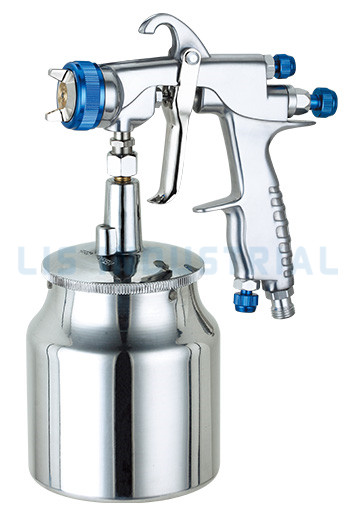
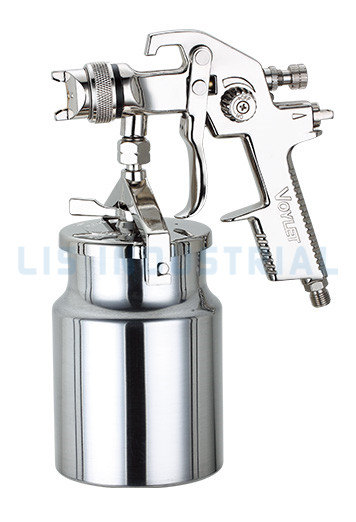
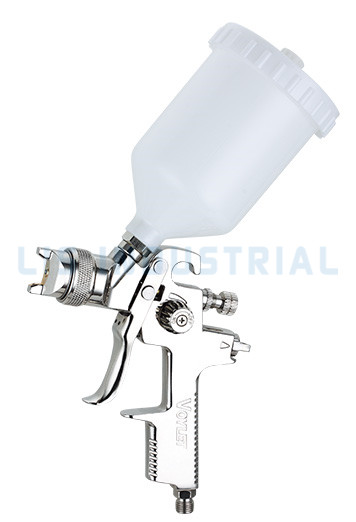
A Gravity Feed high volume low pressure Spray Gun mounts the cup on top of the gun, letting gravity pull material down into the air stream. This design generally produces a more even spray pattern with less waste at the bottom of the cup, and tends to be easier to clean since material drains fully rather than pooling. Suction feed guns, by contrast, mount the cup underneath and draw material up using air pressure, which usually means a larger cup option but a slightly less consistent pattern at low material levels.
Gravity feed HVLP spray gun Suction feed spray gun
Gravity feed models generally score higher on finish quality, portability, and cleaning ease, while suction feed guns hold an edge on raw cup capacity for larger jobs. Pressure feed guns, used less often for small jobs, connect to a separate pressurized pot and work well when a job needs continuous material flow over an extended session without stopping to refill a smaller cup.
Mistake 3: Ignoring Compressor CFM and Air Pressure Requirements
An HVLP spray gun is only as good as the air supply behind it. A common and costly mistake is buying a gun without checking whether the shop compressor can sustain the air volume the gun actually needs at the inlet, measured in cubic feet per minute, commonly shortened to CFM.
How air demand rises with nozzle tip size
Larger nozzle tips move more material per second, which means they also need more air volume to atomize that material properly. The line chart below shows a typical relationship between nozzle tip size and the CFM a pneumatic HVLP spray gun needs at the inlet to maintain proper atomization.
A small home compressor rated well under the CFM a larger tip demands will cause the gun to lose pressure mid-pass, producing a spitting pattern and uneven coverage. Checking the manufacturer's stated CFM at the gun, not simply the compressor's horsepower rating on the box, is the detail that prevents this mistake on both a professional HVLP spray gun and an entry level model alike.
Mistake 4: Picking the Wrong Nozzle Tip Size for the Coating
Nozzle tip size, usually listed in millimeters, controls how much fluid passes through the gun per trigger pull and how fine the atomized pattern will be. Using a tip sized for thin stain on a thick primer, or the reverse, is one of the most common reasons a new gun produces disappointing results in the first few sessions.
| Table 1: Eight mistakes to avoid before buying an HVLP spray gun | ||
| Mistake | What Goes Wrong | Practical Fix |
| 1. Confusing HVLP with conventional guns | Buyer expects identical setup and results | Understand the transfer efficiency difference first |
| 2. Wrong feed type | Gravity, suction, or pressure feed mismatched to the job | Match feed type to material volume and gun angle needs |
| 3. Ignoring compressor requirements | Compressor cannot sustain required air volume | Check CFM at the gun inlet, not just tank size |
| 4. Wrong nozzle tip size | Coating too thin, too thick, or textured for the tip | Match tip size to fluid viscosity and coating type |
| 5. Underestimating cup capacity and ergonomics | Frequent refills or wrist fatigue on long jobs | Size the cup and grip to the job duration |
| 6. Overlooking build quality | Seals and internal passages wear out early | Check body material and internal passage finishing |
| 7. Neglecting maintenance planning | Clogged nozzle and needle shorten gun life | Confirm spare parts and cleaning kit availability |
| 8. Skipping manufacturer support checks | No path for custom builds or OEM programs | Review OEM and ODM capability before ordering in volume |
When a job covers more than one coating type, many finishers keep a second gun body or an extra interchangeable tip and needle set on hand rather than trying to force one tip size to handle every material that comes through the shop.
Mistake 5: Underestimating Fluid Cup Capacity and Ergonomics
Cup size and grip comfort rarely make the top of a buyer's checklist, yet both directly affect how long a session can run before a break is needed. A cup that is too small for the job means constant refilling and a higher chance of runs or overlap marks where spraying resumes.
Ergonomic details worth checking in person
- Grip diameter and whether it suits a smaller or larger hand comfortably
- Trigger pull weight, since a stiff trigger tires the index finger over a long session
- Overall gun weight once the cup is filled, not just the empty weight listed on a spec sheet
- Balance point between the cup and the air inlet, which affects wrist strain during overhead spraying
Mistake 6: Overlooking Gun Body Material and Build Quality
Solvent based coatings, reducers, and cleaning agents are hard on internal seals and passages over time. A gun body machined from a durable aluminum alloy with well finished internal fluid passages tends to hold its spray pattern consistent for far longer than a gun with rough internal casting or a low grade seal set.
What to check before ordering
- Whether the gun body and cap are machined aluminum or a lighter composite material
- Needle and nozzle material, since stainless components resist wear better under solvent based coatings
- Seal material compatibility with the coatings and cleaning solvents used in the shop
- Whether the trigger and air valve assembly feel solid with no noticeable play
An industrial HVLP spray gun used daily across multiple shifts needs noticeably tougher internals than a gun picked up for occasional home workshop touch-ups, and checking build quality upfront avoids a costly early replacement.
Mistake 7: Neglecting Maintenance and Spare Parts Availability
Even a well built HVLP spray gun needs a consistent cleaning routine, and skipping it is one of the fastest ways to shorten a gun's working life. Dried coating left in the nozzle, needle channel, or air cap holes changes the spray pattern long before the gun visibly appears worn.
| Table 3: Basic maintenance schedule for an HVLP spray gun | ||
| Component | Recommended Check | Frequency |
| Nozzle and air cap | Soak and clear holes with a soft brush | After every use |
| Fluid needle | Wipe clean and inspect tip for wear | After every use |
| Cup gasket and lid seal | Check for cracking or hardening | Monthly under regular use |
| Trigger and air valve | Lubricate moving parts lightly | Every few weeks under regular use |
Before buying, it helps to confirm that replacement nozzles, needles, and seal kits for the exact model are actually available, rather than discovering months later that spare parts are hard to source.
Mistake 8: Skipping a Check on Manufacturer Support and OEM Capability
For shops buying in volume, or distributors sourcing equipment for resale, the manufacturer standing behind the gun matters as much as the gun's specification sheet. A supplier that only offers a fixed catalog model with no flexibility can be a poor fit for a business that needs branded packaging, adjusted cup sizes, or a control layout matched to an existing product line.
What to confirm with a manufacturer before a bulk order
- Whether OEM production from customer drawings or samples is available
- Whether ODM development support exists for a new design concept
- Typical lead time and communication process during sample development
- Whether the factory can supply consistent volumes as order size grows
Working with an established HVLP spray gun manufacturer that already runs both standard and OEM HVLP spray gun programs tends to simplify this process considerably, since the factory already has the tooling and workflow in place rather than needing to build a custom process from a single order.
About Ningbo Lis Industrial Co., Ltd
Ningbo Lis Industrial Co., Ltd is an established HVLP spray gun supplier and HVLP spray gun factory based in China, built around a dedicated research and development team. Beyond OEM production from drawings or samples supplied by customers, Lis also offers ODM development support shaped around a client's own requirements, giving buyers more than one path into a finished product.
Over time, Lis has built a marketing and service network that reaches customers across Europe, North America, the Middle East, South Africa, and East Asia, supporting long term business relationships in each of those regions. Both air powered and pneumatic HVLP spray gun configurations are available with customization options, making Lis a practical starting point for buyers comparing a custom spray gun manufacturer for a private label program or a distributor looking for a dependable gravity feed HVLP spray gun supply partner.
Frequently Asked Questions
- Q1: What is an HVLP spray gun
It is a spray gun that atomizes coating using a high volume of air at a comparatively low pressure at the air cap, which improves how much material lands on the surface instead of bouncing away as overspray. - Q2: What is a gravity feed spray gun
It is an HVLP configuration with the fluid cup mounted on top of the gun, letting gravity feed material down into the air stream, which generally gives a more even pattern and easier cleanup. - Q3: Why choose HVLP over conventional spray guns
HVLP guns typically reach a noticeably higher transfer efficiency than conventional siphon guns, which means less wasted material and a cleaner working environment during a spraying session. - Q4: How does HVLP reduce overspray
By moving air at a lower pressure through a larger volume, the gun atomizes coating more gently, so more of the material settles onto the surface instead of drifting away as fine mist. - Q5: What compressor size is required for an HVLP spray gun
Compressor requirements depend on the nozzle tip size in use, since larger tips need a higher sustained CFM at the gun inlet, so checking the manufacturer's CFM specification against the compressor's continuous output is the key step. - Q6: What nozzle size should I choose
Thin materials such as stains generally work well with a smaller tip around 1.0 to 1.3 mm, while thicker primers, fillers, and textured coatings need a larger tip in the 1.8 to 2.5 mm range for even atomization. - Q7: Can an HVLP spray gun be used for automotive finishing
Yes, an automotive HVLP spray gun is a common choice for basecoats, single stage colors, and clearcoats, since the higher transfer efficiency helps achieve a smooth, even panel finish with less overspray in the booth. - Q8: How should an HVLP spray gun be cleaned and maintained
The nozzle, air cap, and needle should be cleaned after every use to prevent dried coating buildup, while gaskets, seals, and the trigger assembly benefit from a periodic check to catch wear before it affects the spray pattern.