 Search
 English
 中文简体
中文简体 Deutsch
 Español
Content
- 1 Yes an HVLP Spray Gun Can Paint a Car
- 2 How an HVLP Spray Gun Works for Car Painting
- 3 Why HVLP Suits Automotive Paint Jobs
- 4 Choosing an HVLP Spray Gun for Automotive Work
- 5 Gravity Feed Compared With Other HVLP Feed Systems
- 6 Nozzle Size Guide for Car Painting
- 7 Recommended Air Pressure by Coating Stage
- 8 Step by Step Process for Painting a Panel
- 9 HVLP Spray Guns in Industrial Coating Work
- 10 Common Mistakes When Spraying With HVLP Equipment
- 11 Cleaning and Maintenance Tips
- 12 Frequently Asked Questions
- 12.1 Q1 What does HVLP stand for
- 12.2 Q2 What is an HVLP spray gun
- 12.3 Q3 How does an HVLP spray gun work
- 12.4 Q4 What is an HVLP spray gun used for
- 12.5 Q5 What are the benefits of HVLP spray guns
- 12.6 Q6 How do I choose an HVLP spray gun
- 12.7 Q7 What is a good HVLP spray gun for automotive painting
- 12.8 Q8 What is a good HVLP spray gun for furniture
- 12.9 Q9 What nozzle size should I use with an HVLP spray gun
- 12.10 Q10 What PSI should an HVLP spray gun use
Yes an HVLP Spray Gun Can Paint a Car
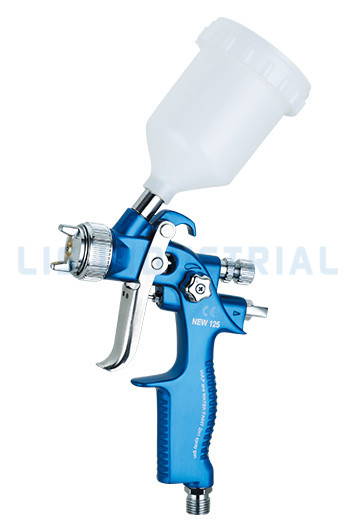
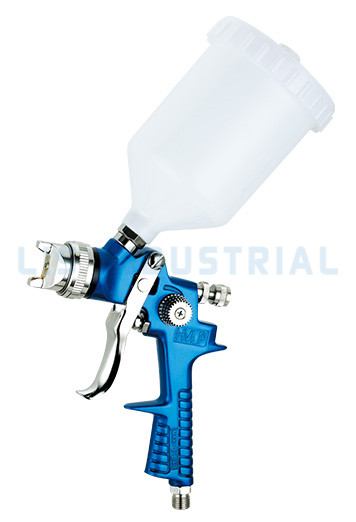
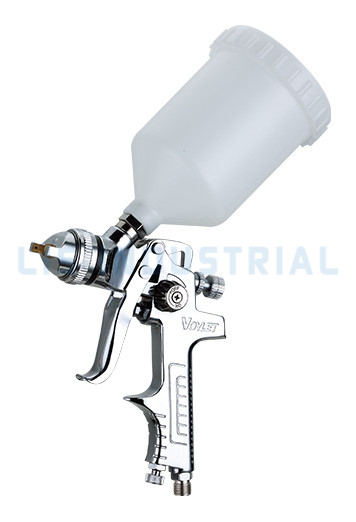
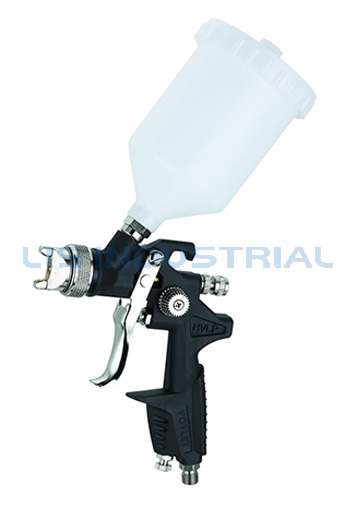
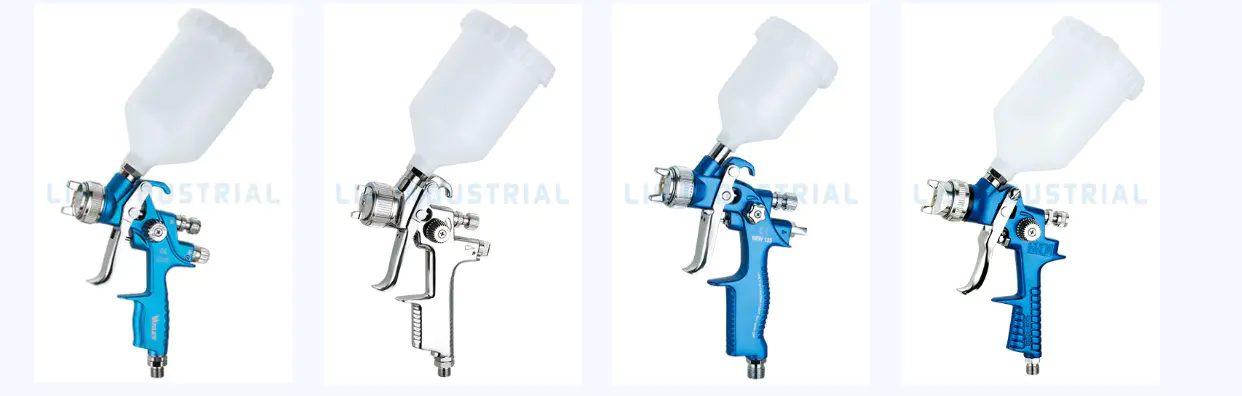
A HVLP spray gun is a standard tool for automotive refinishing work. Body shops, restoration workshops and detail-oriented hobbyists use a gravity feed high volume low pressure spray gun to apply primer, base coat, and clear coat on full panels or entire vehicle bodies. The technology atomizes paint using a larger volume of air moved at a lower pressure than older conventional guns, which helps the material land on the panel instead of drifting away as fine mist.
For this to work well on a car body, three things need to line up together: the correct nozzle size for the coating being sprayed, an inlet air pressure that matches that coating stage, and paint that has been thinned to the viscosity the gun manufacturer recommends. When those three variables are set correctly, an HVLP spray gun for automotive work can produce a smooth, even film across large body panels, tight corners, and detail areas alike.
How an HVLP Spray Gun Works for Car Painting
An automotive paint spray gun built on HVLP principles pushes a high volume of air through the air cap at a comparatively low pressure, commonly defined as no more than 10 psi measured at the cap itself. That air stream breaks the paint stream leaving the fluid nozzle into a fine, controllable pattern. Because less air pressure is wasted bouncing paint particles back off the surface, more of the material that leaves the gun actually reaches the panel.
Main Components Involved
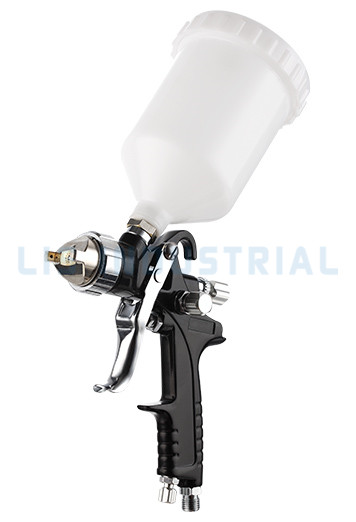
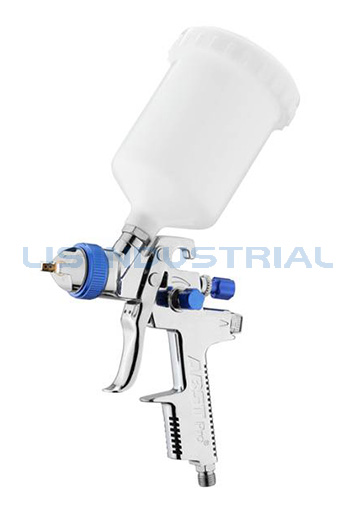
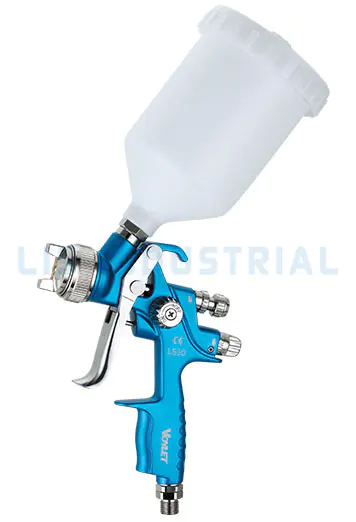
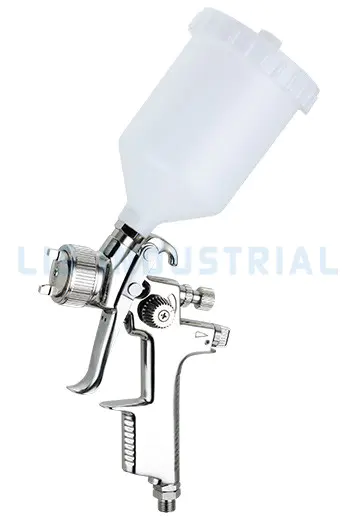
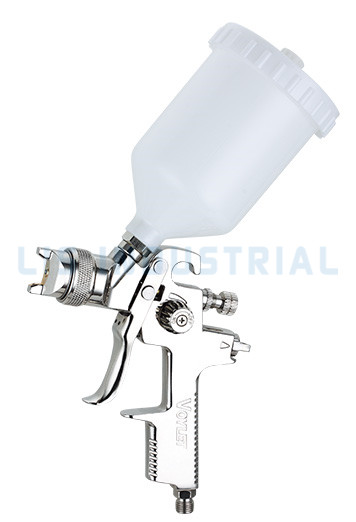
- Gravity cup - mounted above the gun body, feeding fluid downward by gravity
- Fluid nozzle and needle - control how much paint passes through per trigger pull
- Air cap - shapes the atomized paint into a fan, round, or oval pattern
- Trigger - a two stage pull, air first, then fluid, giving the painter control at the start and end of each pass
- Adjustment knobs - fine tune fan width, fluid volume, and air flow independently
This layout is why a gravity feed high volume low pressure spray gun is favored on vehicle bodywork over other feed styles. Gravity assists material flow at low pressure, which keeps atomization consistent even as the cup empties.
Why HVLP Suits Automotive Paint Jobs
Coating industry guidance commonly separates spray equipment by transfer efficiency, meaning the share of sprayed material that actually lands on the part rather than becoming overspray. HVLP equipment was originally promoted under air quality regulations that required a minimum transfer efficiency figure, and it remains the reference point most finishing guides use when comparing gun types.
General transfer efficiency ranges referenced across common coatings industry guidance
Practical Benefits on a Vehicle Body
- Less airborne overspray around the booth, keeping surrounding panels cleaner during multi-panel jobs
- More consistent film build across large flat panels such as doors, hoods, and roofs
- Softer trigger response, which helps when blending base coat into an existing panel
- Lower material use per finished panel compared with higher pressure equipment
Choosing an HVLP Spray Gun for Automotive Work
Selecting the right automotive HVLP spray gun starts with matching the feed system to the type of work planned. Feed type changes how the cup sits on the gun, how much material it holds, and how well the gun handles detail work versus continuous coverage.
| Common HVLP feed configurations used across automotive and general finishing work | |||
| Feed Type | Best Suited For | Cup Position | Typical Capacity |
| Gravity Feed | Panels, base coat, clear coat, detail areas | Mounted on top | 400 to 1000 ml |
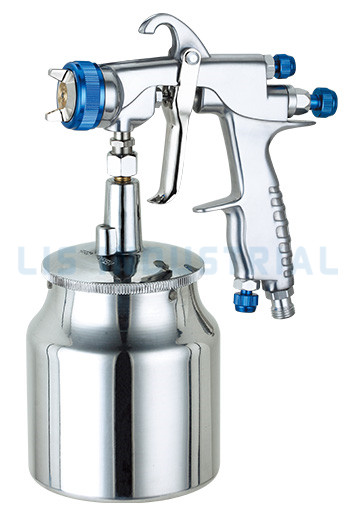
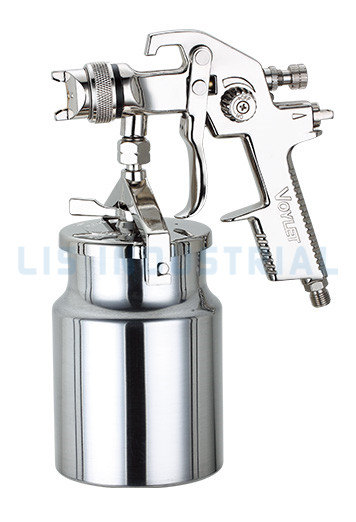
| Siphon Feed | General purpose, larger flat surfaces | Mounted below | 500 to 1000 ml |
| Pressure Feed | Continuous industrial coating runs | Remote pressure tank | 1 to 20 liters |
For a single vehicle or panel repair, a HVLP automotive paint gun built around gravity feed usually gives the painter the most direct control, since the cup sits in view and the fluid line to the nozzle is short.
Gravity Feed Compared With Other HVLP Feed Systems
Feed type affects more than convenience. It changes how consistent atomization stays as the cup empties, how easy the gun is to clean between color changes, and how well it handles detail work around trim and edges. The chart below places gravity feed, siphon feed, and pressure feed against five practical measures on a simple 1 to 5 relative scale used commonly in finishing guides.
Relative comparison used as general guidance rather than a fixed measurement
Gravity feed tends to score higher on control and detail work because the fluid path is short and steady even at low cup levels, which is part of why a professional HVLP spray gun lineup used in body shops leans heavily toward this configuration for panel work.
Nozzle Size Guide for Car Painting
Nozzle size, sometimes called tip size, is matched to how thick the material is once it has been reduced for spraying. Using too small a nozzle with a heavier primer forces the painter to over thin the material or fight the trigger, while too large a nozzle on a base coat can flood the panel and cause runs.
| General nozzle size reference for common automotive coating stages | ||
| Coating Stage | Nozzle Size | Notes |
| Primer or Surfacer | 1.7 to 2.0 mm | Handles thicker build coats |
| Base Coat | 1.3 to 1.4 mm | Finer atomization for color layers |
| Clear Coat | 1.3 to 1.4 mm | Slightly larger tips reduce orange peel risk |
| Single Stage Enamel | 1.4 to 1.5 mm | Balances color and gloss in one pass |
Recommended Air Pressure by Coating Stage
Inlet pressure on a HVLP spray gun for car painting is normally set at the regulator on the gun handle or at a filter regulator on the air line, and it is adjusted separately for each coating stage because material thickness changes between primer, base coat, and clear coat.
Typical inlet pressure guidance, always confirm against the gun manufacturer instructions
These figures describe pressure measured at the gun inlet rather than at the air cap itself, since most spray booths and compressors are set up to read inlet pressure directly on the regulator gauge. A gravity feed high volume low pressure spray gun generally holds atomization quality across a wider window than older equipment, which gives the painter some room to adjust without the pattern breaking down.
Step by Step Process for Painting a Panel
The sequence below outlines how a gravity feed HVLP spray gun is typically used across a repaired or refinished panel, from surface preparation through the final clear coat pass.
- Clean and mask the panel, then tack off dust immediately before spraying
- Fill the gravity cup with correctly reduced primer and fit the matching nozzle size
- Test the pattern on scrap material and adjust fan width, fluid, and air knobs
- Apply primer in overlapping passes, keeping the gun distance and speed consistent
- Sand, clean, and switch cup and nozzle for base coat application
- Apply base coat in light, even coats until color coverage is uniform
- Switch to clear coat, adjust pressure, and apply the final protective layer
- Gravity feed cup, mounted above the body for a steady fluid path
- Fluid adjustment knob, controlling how far the needle opens
- Gun body, housing the internal air and fluid channels
- Air cap and fluid nozzle, shaping and releasing the atomized pattern
- Trigger, giving two stage control over air and fluid release
- Air inlet fitting, connecting the gun to the regulated air supply
HVLP Spray Guns in Industrial Coating Work
Automotive refinishing is only part of where HVLP equipment is used. An industrial HVLP spray gun handles coating tasks across metal fabrication, cabinetry, equipment finishing, and general maintenance painting, often on siphon or pressure feed setups suited to longer, continuous runs rather than single panel work.
Facilities running an HVLP spray gun for industrial coating lines tend to prioritize larger cup or tank capacity, consistent atomization over long shifts, and nozzle interchangeability so one gun body can move between primers, topcoats, and specialty coatings without needing separate equipment for each material.
Where Industrial and Automotive Needs Overlap
- Both settings depend on matching nozzle size to material viscosity
- Both benefit from stable, low pressure atomization that reduces overspray
- Both require regular cleaning between material or color changes
Common Mistakes When Spraying With HVLP Equipment
Most finish defects traced back to gun setup rather than the paint itself. The list below covers issues that come up often on automotive panels.
- Spraying material that has not been reduced to the viscosity the nozzle size expects
- Holding the gun too close or too far, breaking the intended fan pattern width
- Uneven trigger technique, causing heavier film build at the start or end of a pass
- Overlapping passes inconsistently, leaving visible banding once the clear coat flashes
- Skipping a test pattern on scrap material before moving to the actual panel
Cleaning and Maintenance Tips
| Routine care steps that keep atomization consistent between jobs | ||
| Task | Frequency | Purpose |
| Flush cup and passages | After every use | Prevents dried material from blocking flow |
| Inspect air cap holes | Weekly | Keeps the fan pattern symmetrical |
| Check seals and gaskets | Monthly | Avoids fluid leaks around the needle packing |
| Lubricate trigger pivot | Periodically | Keeps trigger pull smooth and consistent |
About Ningbo Lis Industrial Co Ltd
Ningbo Lis Industrial Co., Ltd has been engaged in the design and manufacture of air and pneumatic spray equipment since 1984. As a manufacturer producing HVLP spray gun and gravity feed high volume low pressure spray gun product lines, the company maintains its own research and development team, supporting original equipment manufacturing based on customer drawings and samples along with original design manufacturing programs built around specific project requirements.
Production covers both automotive HVLP spray gun configurations and industrial HVLP spray gun models used across general coating lines, with distribution reaching Europe, North America, the Middle East, South Africa and East Asia. Customization of air and pneumatic HVLP spray gun equipment is available to match cup capacity, nozzle sizing, and feed type to a customer specific finishing process.

Frequently Asked Questions
Q1 What does HVLP stand for
HVLP stands for High Volume Low Pressure, describing spray equipment that uses a larger volume of air moved at a lower pressure to atomize coating material.
Q2 What is an HVLP spray gun
An HVLP spray gun is a finishing tool that atomizes paint, primer, or clear coat using high air volume at reduced pressure, typically applied through a gravity, siphon, or pressure feed cup.
Q3 How does an HVLP spray gun work
Air moves through the cap and breaks the fluid stream leaving the nozzle into fine droplets, while the trigger controls both air release and fluid volume in a coordinated two stage pull.
Q4 What is an HVLP spray gun used for
It is used for applying primer, base coat, clear coat, single stage enamel, and general industrial coatings across automotive panels, furniture, and metal parts.
Q5 What are the benefits of HVLP spray guns
Benefits generally include reduced overspray, more consistent film build, and lower material use per finished panel compared with higher pressure equipment.
Q6 How do I choose an HVLP spray gun
Consider feed type, nozzle size range, cup capacity, fan pattern adjustment, and how the gun balances in hand during extended work sessions.
Q7 What is a good HVLP spray gun for automotive painting
A gravity feed HVLP spray gun with adjustable fan width and a nozzle range covering primer through clear coat generally suits full panel automotive work.
Q8 What is a good HVLP spray gun for furniture
A gravity feed HVLP spray gun with a smaller nozzle around 1.0 to 1.3 mm and fine fan control tends to suit thinner wood finishes and lacquers.
Q9 What nozzle size should I use with an HVLP spray gun
Base coats and clear coats commonly use 1.3 to 1.4 mm, while thicker primers and surfacers typically call for 1.7 to 2.0 mm.
Q10 What PSI should an HVLP spray gun use
Inlet pressure commonly falls between 20 and 30 psi depending on the coating stage, aimed at keeping air cap pressure within the low pressure range defined for HVLP equipment.