 Search
 English
 中文简体
中文简体 Deutsch
 Español
Content
- 1 What Is an HVLP Spray Gun
- 2 How an HVLP Spray Gun Works
- 3 Core Components of a Gravity Feed HVLP Spray Gun
- 4 Gravity Feed vs Siphon Feed vs Pressure Feed HVLP Spray Guns
- 5 HVLP vs LVLP vs Conventional Spray Guns
- 6 Transfer Efficiency Compared Across Spray Gun Types
- 7 Air Pressure and Air Consumption Requirements
- 8 Nozzle Size and Spray Pattern Selection
- 9 Typical Applications of HVLP Spray Guns
- 10 Materials and Build Quality
- 11 How to Select the Right HVLP Spray Gun
- 12 Maintenance and Cleaning Tips
- 13 Working With a Reliable HVLP Spray Gun Manufacturer
- 14 Frequently Asked Questions
What Is an HVLP Spray Gun
An HVLP spray gun is a spray gun that uses High Volume Low Pressure air to atomize paint or coating material. Compared with a conventional high pressure spray gun, an HVLP spray gun moves a larger volume of air at a lower pressure, which breaks the fluid into fine particles while sending less of it into the air as overspray. In simple terms, an HVLP spray gun applies coatings more efficiently while wasting less material on the surrounding surface and floor.
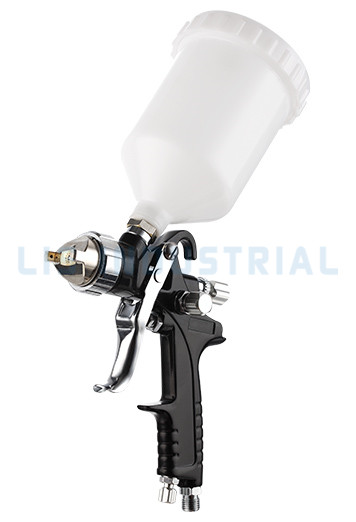
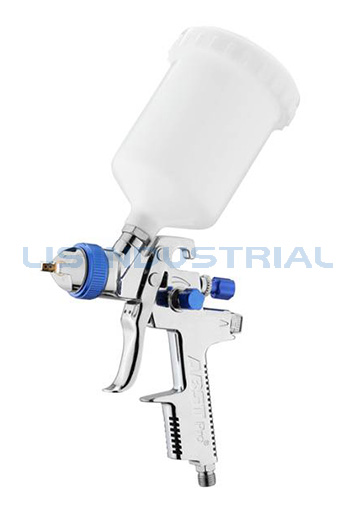
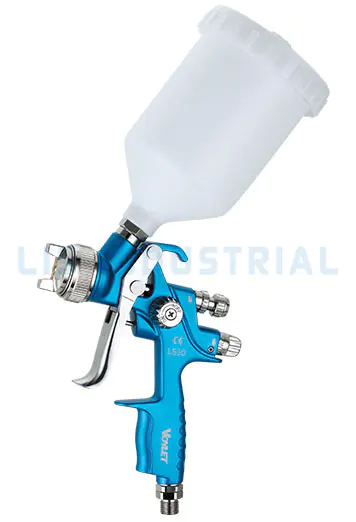
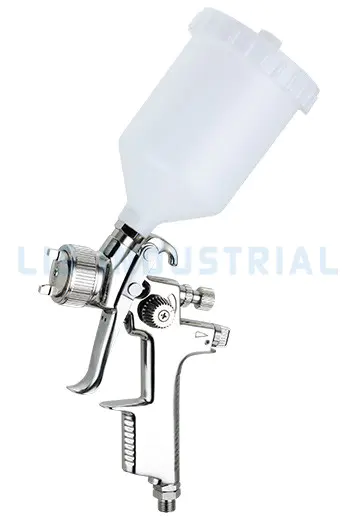
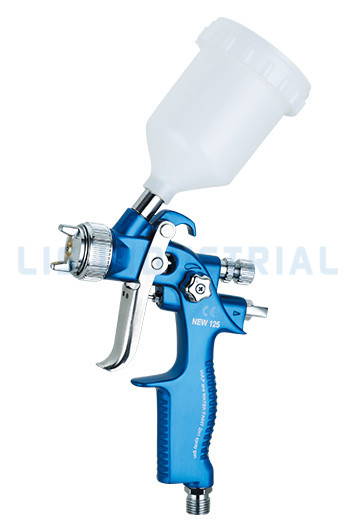
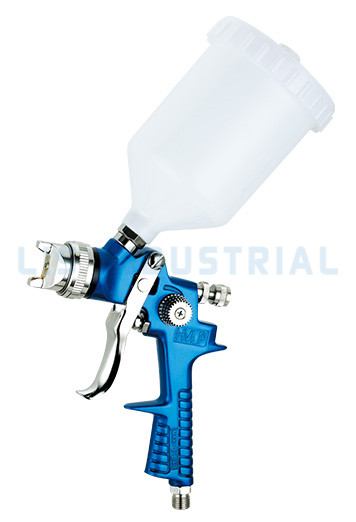
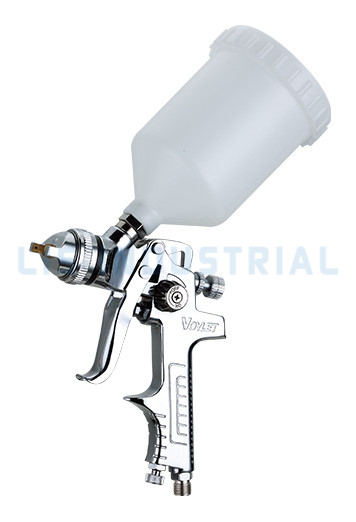
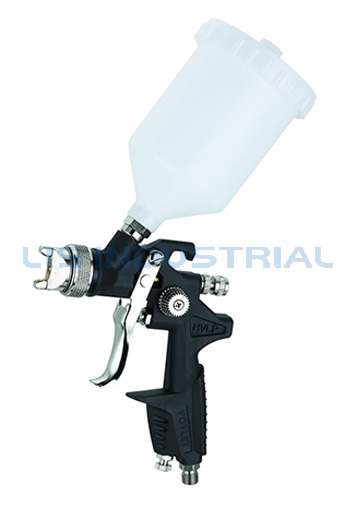
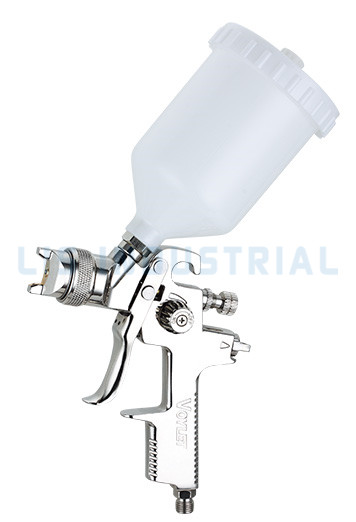
Most HVLP guns sold today are built as a gravity feed high volume low pressure spray gun, meaning the paint cup sits on top of the gun body and feeds material downward into the fluid passage using gravity rather than suction. This layout is popular because it empties the cup more completely and needs less air pressure to draw material into the airstream.
| Feature | Typical Value |
|---|---|
| Feed type | Gravity feed, siphon feed, or pressure feed |
| Air cap pressure | Roughly 0.5 to 10 psi at the cap, depending on the design standard |
| Transfer efficiency | Roughly 60 to 70 percent, depending on gun setup and technique |
| Common nozzle sizes | 1.0mm to 2.0mm depending on material viscosity |
| Common uses | Automotive refinishing, furniture finishing, industrial coating, DIY projects |
How an HVLP Spray Gun Works
The working principle of an HVLP spray gun starts with compressed air entering the gun through the air inlet at the bottom of the handle. Pulling the trigger opens the air valve and the fluid needle at the same time, letting compressed air rush past the nozzle while paint is drawn or gravity fed into the same airstream. The fast moving air shears the paint into fine droplets, a process called atomization, and the air cap shapes those droplets into a controlled fan or round spray pattern before they reach the surface.
Simplified isometric structure of a gravity feed HVLP spray gun, showing the paint cup, air cap and nozzle, trigger, body, handle, and air inlet
Spray Cycle From Trigger Pull to Finished Coat
- Compressed air enters the gun through the air inlet at the base of the handle.
- Pulling the trigger partway opens the air valve, starting airflow through the nozzle.
- Pulling the trigger further retracts the fluid needle, releasing paint into the airstream.
- Air moving through the cap shears the paint into fine droplets, a process known as atomization.
- The air cap horns shape the droplets into a fan or round pattern before they land on the surface.
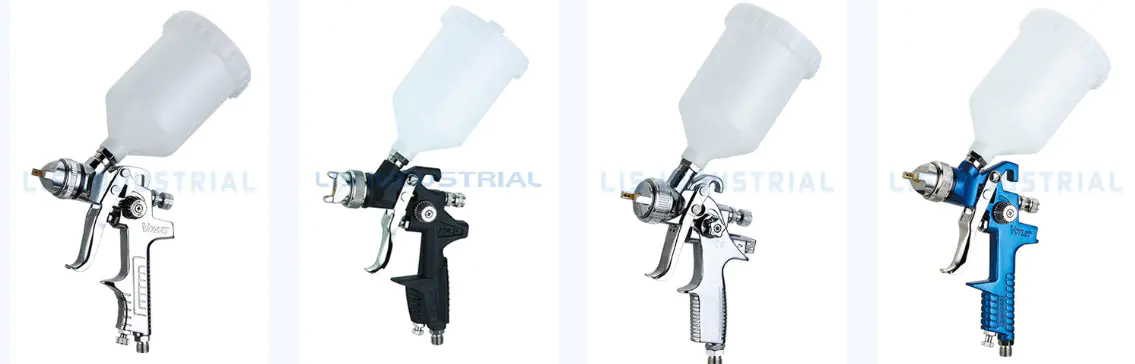
Core Components of a Gravity Feed HVLP Spray Gun
Most HVLP spray guns share the same core parts, whether they are built for automotive refinishing, furniture finishing, or general industrial coating work.
| Main components found on a typical gravity feed HVLP spray gun | |
| Component | Function |
| Paint cup | Holds the coating material and feeds it into the fluid passage |
| Air cap and nozzle | Shapes the atomized paint into the final spray pattern |
| Fluid needle | Controls how much paint is released when the trigger is pulled |
| Trigger | Opens the air valve and fluid needle together to start spraying |
| Air volume control knob | Adjusts the amount of air reaching the cap for fan size and pattern |
| Fluid control knob | Limits how far the needle can retract, controlling fluid output |
| Air inlet | Connects the gun to the compressed air hose at the base of the handle |
Gravity Feed vs Siphon Feed vs Pressure Feed HVLP Spray Guns
An HVLP spray gun can be built around three different cup arrangements, and the right choice depends on the job size, the material viscosity, and how completely the cup needs to empty.
| Comparison of gravity feed, siphon feed, and pressure feed HVLP spray guns | ||
| Feed Type | Cup Position | Best Suited For |
| Gravity feed | On top of the gun body | Automotive panels, furniture, detail work needing full cup drainage |
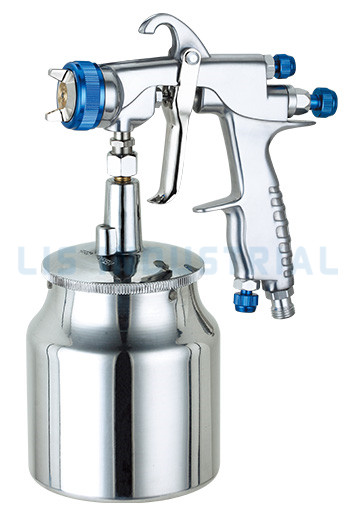
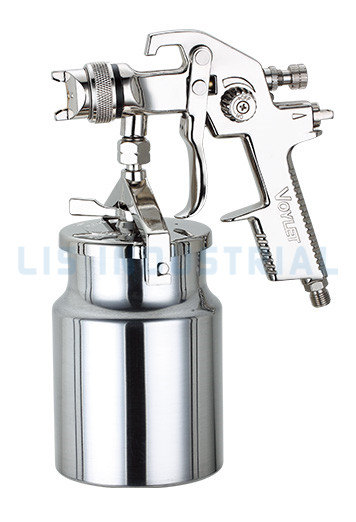
| Siphon feed | Below the gun body | Larger cup capacity, general purpose spraying at various angles |
| Pressure feed | Separate pressurized pot connected by hose | High volume production runs and continuous industrial coating |
Because a gravity feed HVLP spray gun needs less air pressure to move material into the airstream, it remains the most common configuration for automotive refinishing and furniture finishing work where fine control matters.
HVLP vs LVLP vs Conventional Spray Guns
Buyers researching an HVLP spray gun often come across two related terms: LVLP, which stands for Low Volume Low Pressure, and conventional spray guns, which run at higher pressure with less focus on transfer efficiency. LVLP guns use less air volume than HVLP guns, which makes them a practical match for smaller compressors, while still keeping overspray relatively low. Conventional guns apply more pressure to the fluid, giving strong atomization for heavier or fast drying materials, but they typically send more material into the air rather than onto the surface.
Relative comparison of an HVLP spray gun against a conventional high pressure gun across five practical factors, scored on a simple 1 to 5 scale for illustration
Transfer Efficiency Compared Across Spray Gun Types
Transfer efficiency describes how much of the sprayed material actually lands on the target surface rather than drifting away as overspray. This single number is one of the main reasons an HVLP spray gun is favored over older, high pressure equipment for detailed finishing work.
Approximate transfer efficiency ranges by spray gun type, shown for general comparison since actual results vary by material and technique
Air Pressure and Air Consumption Requirements
An HVLP spray gun is typically designed to run with about 26 to 29 psi measured at the air cap for many standard setups, though the exact figure depends on the specific gun and the manufacturer datasheet. Air consumption, measured in cubic feet per minute, rises as the nozzle or tip size increases, which is an important detail when matching a gun to an air compressor.
Approximate air consumption in cubic feet per minute against nozzle tip size, shown for illustration since actual demand varies by gun model
Nozzle Size and Spray Pattern Selection
The nozzle, sometimes called the tip or fluid nozzle, is one of the most important choices when setting up an HVLP spray gun. A smaller nozzle suits thin, fast flowing material, while a larger nozzle is needed for thicker coatings that would otherwise struggle to atomize cleanly.
| Common nozzle sizes for an HVLP spray gun and typical matching material | |
| Nozzle Size | Typical Material |
| 1.0mm to 1.2mm | Basecoats, stains, and thin toners |
| 1.3mm to 1.4mm | Primers, sealers, and general purpose coatings |
| 1.5mm to 1.8mm | Clear topcoats and general varnish work |
| 1.8mm to 2.0mm | Heavier industrial coatings and textured finishes |
Typical Applications of HVLP Spray Guns
An HVLP spray gun is used wherever a controlled, even finish matters more than raw spraying speed, which explains why it appears across such a wide range of industries.
Approximate distribution of common end use applications for HVLP spray guns across finishing and coating projects
Materials and Build Quality
The materials used in the fluid path and body of an HVLP spray gun affect both durability and compatibility with different coating chemistries.
- Stainless steel nozzles and needles resist a wide range of solvent based and water based coatings without corroding over time.
- Brass fittings are common on the air passages and adjustment knobs, offering smooth threading and reliable sealing.
- Aluminum or composite gun bodies keep overall weight down, which matters during long finishing sessions.
- Seals and packings made from PTFE or similar materials keep the fluid passage sealed while still allowing smooth needle movement.
How to Select the Right HVLP Spray Gun
Matching an HVLP spray gun to the job at hand comes down to a short checklist of practical factors.
- Choose a feed type, gravity, siphon, or pressure, based on cup capacity and spraying angle needs.
- Match the nozzle size to the viscosity of the coating being applied.
- Confirm the air compressor can supply the CFM the gun requires at the working pressure.
- Consider cup capacity against the size of the job to avoid frequent refilling.
- Check gun weight and balance if the work involves extended spraying sessions.
- Look for a gun that disassembles easily for cleaning between coating changes.
- Confirm the gun has separate air volume and fluid adjustment knobs for fine control.
- Match the gun to the application, whether automotive, furniture, industrial, or DIY work.
Maintenance and Cleaning Tips
An HVLP spray gun performs consistently for a long time when it receives a few simple maintenance habits after each use.
- Clean the cup, nozzle, and fluid passage immediately after finishing a coating run, before material dries inside the gun.
- Avoid soaking rubber or synthetic seals in aggressive solvents for long periods, since this can shorten their working life.
- Inspect O-rings and seals on a regular basis and replace any that show cracking or hardening.
- Store the gun with the fluid needle relaxed rather than pulled tight against the seat.
- Use a filter and regulator on the air line to keep moisture and debris out of the gun.
- Add a light drop of lubricant to the trigger pivot point to keep the action smooth.
Working With a Reliable HVLP Spray Gun Manufacturer
Ningbo Lis Industrial Co., Ltd is an established HVLP spray gun manufacturer and gravity feed HVLP spray gun factory based in China. The company maintains a dedicated research and development team and works with customers on both drawing based and sample based projects, offering itself as an OEM HVLP spray gun and ODM partner for brands that need a tailored spraying solution.
As a broad based HVLP spray gun supplier, Lis produces equipment across several use cases, including an automotive HVLP spray gun line for refinishing work, an industrial HVLP spray gun range for production coating lines, and general purpose models suited to smaller workshops. Buyers looking for a professional HVLP spray gun or an HVLP paint spray gun supplier for bulk ordering can also work with the company on HVLP spray gun wholesale volumes, with air and pneumatic spray gun models available for customization.
Lis has built a marketing and service network that reaches customers across Europe, North America, the Middle East, South Africa, and East Asia, and the company continues to develop long term business relationships across those regions through consistent product quality and responsive project support.

Frequently Asked Questions
|
Q1: What is an HVLP spray gun HVLP means High Volume Low Pressure. It uses a higher volume of air at a lower pressure than conventional guns to improve transfer efficiency and reduce overspray while applying paint or coating material. |
Q2: How does an HVLP spray gun work Compressed air moves through the gun and past the nozzle, atomizing paint particles into a fine mist. This higher volume, lower pressure airflow improves transfer efficiency compared with older spraying methods. |
|
Q3: What are HVLP spray guns used for HVLP spray guns are commonly used for automotive painting, furniture finishing, industrial coating, and a wide range of DIY projects where a smooth, even finish is the goal. |
Q4: What is the difference between HVLP and LVLP spray guns HVLP guns use a higher volume of air, while LVLP, or Low Volume Low Pressure, guns use less air volume, which suits smaller compressors, though HVLP guns often still offer stronger overall atomization on larger jobs. |
|
Q5: What is the difference between gravity feed and siphon feed HVLP spray guns A gravity feed HVLP spray gun holds the cup on top and drains more completely, while a siphon feed gun holds the cup below the body and typically offers a larger material capacity for continuous jobs. |
Q6: What air compressor size do you need for an HVLP spray gun Requirements vary by nozzle size and gun model, but many HVLP spray guns need somewhere between about 4 and 14 cubic feet per minute of air, so checking the specific gun datasheet against the compressor rating is recommended. |