 Search
 English
 中文简体
中文简体 Deutsch
 Español
Content
- 1 How HVLP Technology Reduces Overspray at the Source
- 2 Transfer Efficiency: The Key Metric for Paint Savings
- 3 Gravity Feed HVLP Spray Guns: Design Advantages That Enhance Efficiency
- 4 HVLP vs. Conventional Spray Guns: A Direct Comparison
- 5 Factors That Maximize Paint Savings When Using an HVLP Spray Gun
- 6 Overspray Reduction Across Different Coating Applications
- 7 Regulatory and Environmental Benefits of HVLP Spray Guns
- 8 Choosing the Right HVLP Spray Gun for Your Needs
- 9 About NINGBO LIS INDUSTRIAL CO., LTD.
- 10 Frequently Asked Questions
Yes — HVLP spray guns are specifically engineered to save paint and reduce overspray, and the performance advantage over conventional spray equipment is substantial. A properly operated HVLP spray gun achieves a transfer efficiency of 65% to 90%, meaning the majority of paint being sprayed actually reaches the surface. By contrast, conventional high-pressure spray guns typically deliver transfer efficiencies of only 25% to 40%. The difference represents real savings in material, reduced airborne waste, and a cleaner working environment.
HVLP — High Volume Low Pressure — technology works by delivering a high volume of air at low atomizing pressure, typically below 10 PSI at the air cap. This low-velocity spray pattern allows paint droplets to land on the target surface rather than bouncing off or drifting away as overspray. The result is a finish that is both economical on material and significantly cleaner in operation.
How HVLP Technology Reduces Overspray at the Source
Overspray occurs when atomized paint particles fail to reach the target surface — either because they are traveling too fast, are too small to adhere, or are deflected by the turbulence created at high pressure. Conventional spray systems operate at 40 to 60 PSI at the gun, which accelerates paint particles rapidly and creates significant rebound and drift.
An HVLP spray gun addresses these problems at a fundamental level. By limiting air cap pressure to 10 PSI or less — as mandated by regulatory standards in many regions — the spray pattern is softer and more controlled. Paint droplets arrive at the surface with lower kinetic energy, so they settle rather than bounce. The larger droplet size produced by HVLP atomization also resists wind drift better than the ultra-fine mist of high-pressure guns.
In regulated environments such as California's Rule 1151 and South Coast AQMD regulations, HVLP spray guns are mandated precisely because of their demonstrated ability to reduce volatile organic compound (VOC) emissions from overspray by up to 60% compared to conventional equipment.
Transfer Efficiency: The Key Metric for Paint Savings
Transfer efficiency (TE) is the single most important metric when evaluating how much paint a spray system wastes. It expresses the percentage of paint that actually deposits on the workpiece relative to the total paint consumed. The higher the transfer efficiency, the less paint is wasted as overspray.
To put this in practical terms: if a conventional gun wastes 65 cents of every dollar spent on paint, a professional-grade HVLP spray gun reduces that waste to roughly 10 to 15 cents. For operations spraying even modest volumes — 10 liters of paint per week — the material savings over a year are significant.
Gravity Feed HVLP Spray Guns: Design Advantages That Enhance Efficiency
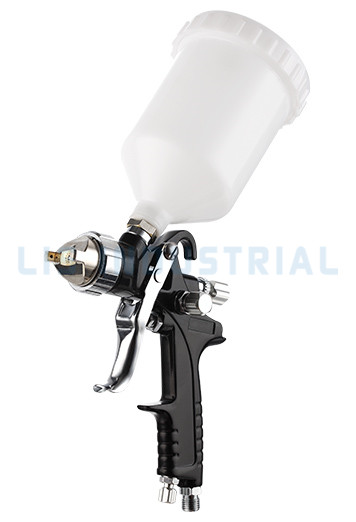
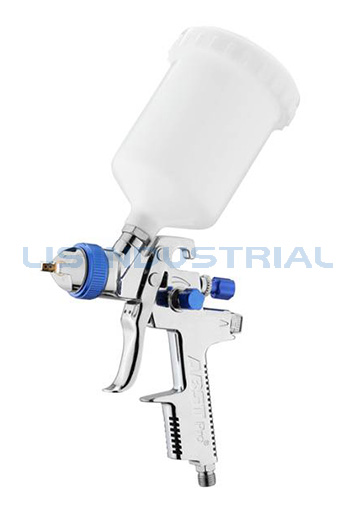
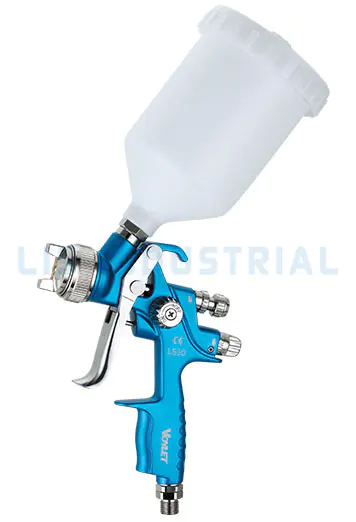
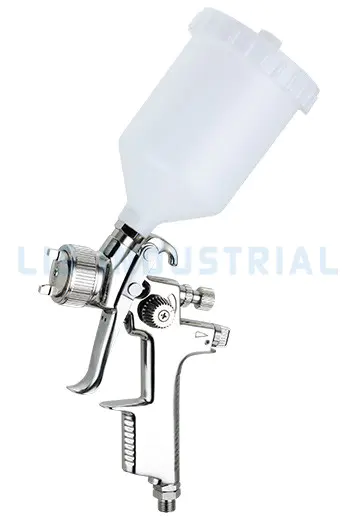
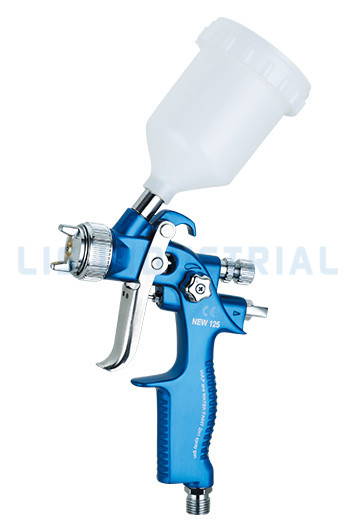
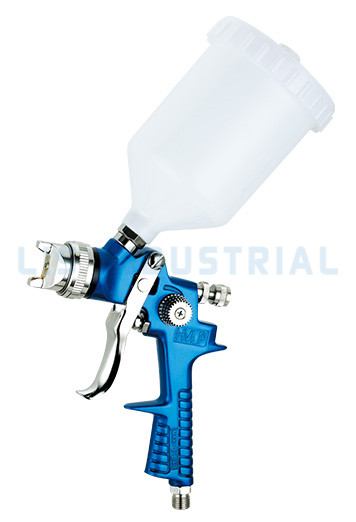
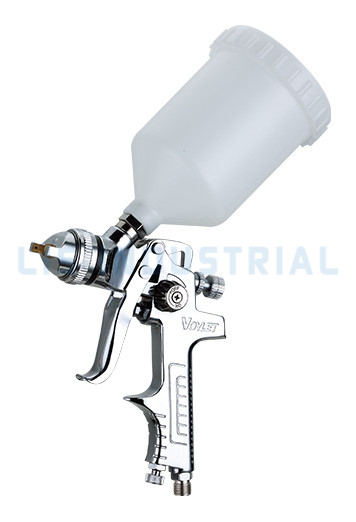
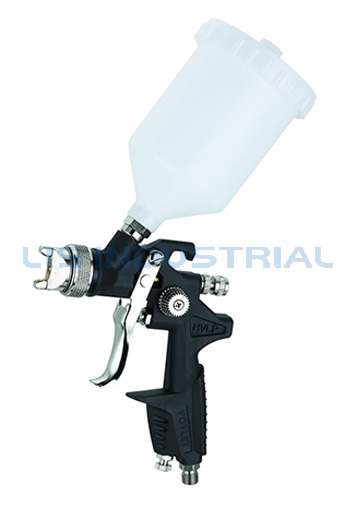
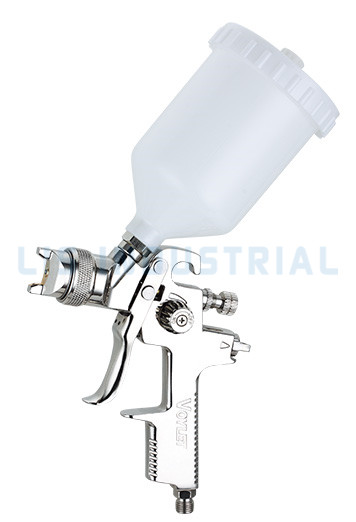
Among the different HVLP configurations, the Gravity Feed High Volume Low Pressure Spray Gun stands out for its particular combination of efficiency and finish quality. Its design places the paint cup on top of the gun body, using gravity to feed paint into the fluid needle assembly rather than relying on suction or pressure.
Why Gravity Feed Reduces Waste Further
The gravity feed system delivers paint to the fluid tip with minimal air pressure required to draw fluid. This means the atomizing air pressure can be kept lower compared to siphon-feed guns, which translates directly into a softer spray pattern and even less overspray. Additionally:
- The top-mounted cup allows nearly complete use of paint — almost no residual material is stranded in the cup or feed tube as happens with siphon systems.
- Gravity feed guns are easier to clean between coats or color changes, reducing solvent usage and contamination risk.
- The reduced inlet pressure requirement means a smaller compressor can supply adequate air, lowering energy consumption in the workshop.
- The balanced weight distribution of a gravity feed HVLP spray gun reduces operator fatigue, leading to more consistent gun technique and, consequently, more uniform film thickness with less rework.
Ideal Applications for Gravity Feed HVLP
The Gravity Feed High Volume Low Pressure Spray Gun performs best in applications where finish quality, paint economy, and material cost are priorities — automotive refinishing, furniture lacquering, cabinet painting, and high-end woodworking are all environments where this configuration excels. Its lower air volume requirement also makes it well suited for smaller compressors commonly found in body shops and custom workshops.
HVLP vs. Conventional Spray Guns: A Direct Comparison
The practical differences between HVLP spray guns and conventional high-pressure systems affect not only paint consumption but also finish quality, compliance, and operating costs. The table below summarizes the key performance differences:
| Table 1: Performance comparison between HVLP spray guns and conventional high-pressure spray equipment | ||
| Parameter | HVLP Spray Gun | Conventional High-Pressure Gun |
| Air cap pressure | Under 10 PSI | 40–60 PSI |
| Transfer efficiency | 65–90% | 25–40% |
| Overspray generation | Low | High |
| VOC emissions | Significantly reduced | High |
| Regulatory compliance | Meets most regional standards | Restricted in many jurisdictions |
| Finish quality on flat surfaces | Excellent | Good to excellent |
| Spray speed (production rate) | Moderate to high | High |
| Operator health risk (fumes/mist) | Lower | Higher |
Factors That Maximize Paint Savings When Using an HVLP Spray Gun
An HVLP spray gun's efficiency potential is only fully realized when the equipment is set up and operated correctly. The following factors have the greatest impact on actual paint consumption and finish quality:
Fluid Tip and Needle Sizing
Matching the fluid tip size to the viscosity of the coating is critical. As a general guide: thin materials such as stains and sealers work best with 1.0 to 1.3mm tips; medium-viscosity coatings like basecoats and primers use 1.3 to 1.5mm; heavier materials such as high-build primers and texture coatings require 1.7 to 2.0mm or larger. An undersized tip forces higher fluid pressure to achieve flow, which increases overspray; an oversized tip delivers too much material per pass, causing runs and wasted paint.
Air Pressure and Fan Pattern Adjustment
Setting air pressure to the minimum required to achieve good atomization is a core principle of HVLP operation. Excess pressure increases overspray without improving the finish. Most HVLP spray guns perform optimally at an inlet pressure of 25 to 45 PSI, producing the regulated air cap pressure of under 10 PSI. Fan width should be adjusted to match the width of the surface being coated — a wide fan on a narrow surface wastes paint on areas beyond the edge.
Gun Distance and Technique
The correct spray distance for most HVLP spray guns is 15 to 20 centimeters from the surface. Spraying closer than 15cm concentrates too much material in one area and causes runs; spraying further than 25cm allows more droplets to miss the target, increasing overspray. Consistent gun speed — typically 30 to 60 centimeters per second — ensures even film thickness without heavy spots.
Paint Viscosity and Thinning
HVLP guns operate at low pressure, so paint must be thinned to an appropriate viscosity to atomize correctly. Over-thinning reduces build per coat and requires additional coats to achieve coverage — negating the efficiency gains. Always follow coating manufacturer recommendations for thinning ratios and test atomization quality on a test panel before committing to the full workpiece.
Overspray Reduction Across Different Coating Applications
The overspray reduction achieved by an HVLP spray gun varies by application type, as different coatings have different viscosities and application demands. The chart below illustrates typical overspray reduction compared to conventional spray systems:
Regulatory and Environmental Benefits of HVLP Spray Guns
Beyond material savings, the use of an HVLP spray gun carries meaningful regulatory and environmental advantages that are increasingly relevant to professional operations in both established and emerging markets.
- VOC compliance: Many regional air quality regulations mandate minimum transfer efficiencies for spray equipment in commercial refinishing operations. HVLP spray guns meet or exceed these thresholds in most jurisdictions, while conventional guns frequently do not.
- Reduced airborne particulates: Lower overspray means less paint mist in the spray booth or workspace, reducing filtration requirements, filter replacement frequency, and hazardous waste disposal volumes.
- Worker health: Less airborne paint means lower operator exposure to solvents and pigments, reducing reliance on respiratory protective equipment and improving long-term occupational health outcomes.
- Booth cleaning intervals: Reduced overspray accumulation on booth walls and floors extends the interval between booth cleaning cycles, saving time and reducing solvent use in maintenance.
Choosing the Right HVLP Spray Gun for Your Needs
Selecting the correct HVLP spray gun for a given application involves evaluating several practical criteria. The following table provides a straightforward guide:
| Table 2: HVLP spray gun selection guide by application type and material | |||
| Application | Recommended Gun Type | Tip Size | Key Feature |
| Automotive refinishing | Gravity Feed HVLP Spray Gun | 1.3–1.4mm | Fine atomization, high TE |
| Wood furniture and cabinets | Gravity Feed HVLP Spray Gun | 1.0–1.3mm | Soft pattern, minimal runs |
| High-build primers | HVLP Spray Gun (larger body) | 1.7–2.0mm | High fluid flow, wide fan |
| Metal fabrication coatings | HVLP Spray Gun | 1.4–1.6mm | Durable body, wide spray arc |
| Architectural interior paint | HVLP Spray Gun | 1.5–1.8mm | High fluid delivery, wide fan |
About NINGBO LIS INDUSTRIAL CO., LTD.
Ningbo Lis Industrial Co., Ltd. is an advanced China HVLP Spray Gun manufacturer and Gravity Feed HVLP Spray Gun factory. The company's products have passed CE, GS, and other internationally recognized quality certifications, reflecting a consistent commitment to the highest standards in product quality.
Lis maintains a strong in-house R&D team capable of delivering OEM services based on customer drawings or samples, as well as full ODM development according to specific project requirements. This flexibility allows Lis to serve a wide range of industrial customers with tailored pneumatic and air spray gun solutions.
Through years of development, Lis has established a worldwide marketing and service network, with products widely sold into Europe, North America, the Middle East, South Africa, and East Asia. Strong and long-standing business relationships have been developed across these regions, built on reliable product performance and responsive customer support.
Lis offers both air and pneumatic HVLP spray guns with full customization capability, making it a trusted partner for distributors, OEM customers, and professional end-users seeking consistent, high-quality spray finishing equipment.