 Search
 English
 中文简体
中文简体 Deutsch
 Español
Content
- 1 The Root Causes of Orange Peel: A Direct Breakdown
- 2 Air Pressure Settings: The #1 Variable in HVLP Performance
- 3 Paint Viscosity and Thinning: Getting the Mix Right
- 4 Spray Distance, Gun Speed, and Technique Errors
- 5 Temperature, Humidity, and Environmental Factors
- 6 Nozzle and Needle Configuration: Why Gun Setup Matters
- 7 Step-by-Step Orange Peel Troubleshooting Guide
- 8 Correcting Orange Peel After Spraying
- 9 About Ningbo Lis Industrial Co., Ltd.
- 10 Frequently Asked Questions
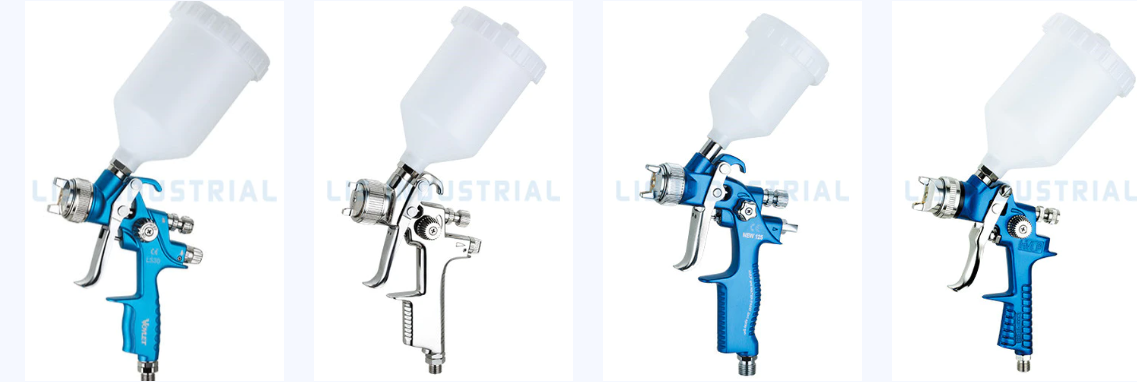
Orange peel texture when spraying is almost always caused by one or more of these core issues: incorrect air pressure, improper paint viscosity, wrong spray distance, or poor gun technique. When using an HVLP spray gun, the high-volume, low-pressure atomization system is highly sensitive to these variables — far more so than conventional airspray guns. Understanding exactly which factor is driving the texture problem in your specific situation is the fastest path to a flawless finish. This article breaks down every cause with data, practical fixes, and real-world context for both DIY painters and professional automotive refinishers.
Orange peel refers to a surface finish that resembles the dimpled skin of an orange — a texture created when paint droplets partially level before drying, leaving a bumpy, undulating surface. It is one of the most common complaints reported by users of HVLP paint sprayers, gravity feed spray guns, and air compressor spray guns alike. While light orange peel can sometimes be corrected with wet sanding and polishing, heavy orange peel often requires respraying — making prevention far more cost-effective than correction.
The Root Causes of Orange Peel: A Direct Breakdown
Orange peel in HVLP spray painting results from paint droplets failing to fully coalesce and level before the surface tacks. The physics are straightforward: if droplets are too large, arrive at the surface too fast, or begin drying too quickly, they freeze in place before the surface tension can pull them flat. The six primary causes are:
- Incorrect air pressure — too low or too high relative to paint viscosity
- Paint too thick — inadequate thinning prevents proper atomization
- Wrong spray distance — holding the gun too far away dries droplets mid-flight
- Incorrect fluid needle/nozzle size — mismatched tip delivers uneven droplet patterns
- Excessive ambient temperature or airflow — accelerates solvent evaporation before leveling
- Improper gun movement speed — moving too slowly deposits too much material at once
Incorrect air pressure alone is implicated in over four out of five orange peel cases, which is why pressure calibration is always the first variable to verify when troubleshooting an HVLP paint sprayer. The good news is that all six causes are fully correctable once identified — no specialized equipment is needed beyond a viscosity cup and a calibrated pressure gauge.
Air Pressure Settings: The #1 Variable in HVLP Performance
The defining characteristic of an HVLP spray gun is its operating principle: high volumes of air delivered at low pressure — typically 0.1 to 10 PSI at the air cap — to atomize paint into fine droplets with minimal overspray. This is fundamentally different from conventional spray guns that operate at 40–70 PSI. Because the pressure window is narrow, small deviations have an outsized effect on finish quality.
Too Low: Poor Atomization
When cap pressure drops below the minimum threshold for a given paint viscosity, the air stream cannot break paint into fine enough droplets. The result is coarse, spattered droplets that land on the surface and cannot level — producing heavy orange peel or even a "cobweb" texture. With a typical automotive HVLP spray gun, this occurs below approximately 6–8 PSI at the cap when spraying standard automotive basecoat.
Too High: Dry Spray and Overspray
Excessive pressure beyond 10 PSI at the cap atomizes paint into excessively fine mist. These micro-droplets lose solvent content rapidly during flight, arriving at the surface semi-dry. They cannot flow together and level properly, leaving a fine-textured, grainy orange peel surface. High pressure also dramatically increases overspray and material waste — a significant cost factor in production painting environments.
Always measure pressure at the air cap, not at the compressor regulator. Hose length, internal diameter, and fittings cause pressure drops that can reduce effective cap pressure by 15–30% in a typical gravity feed spray gun setup.
The chart above illustrates a key principle: finish quality does not improve linearly with pressure. There is a clear optimal pressure band — typically 7–10 PSI at the cap for most automotive-grade coatings — beyond which quality deteriorates even as pressure continues to rise. Professional spray painters refer to this zone as the "sweet spot," and dialing it in for each specific paint product and gun combination is the foundation of a quality spray job.
Paint Viscosity and Thinning: Getting the Mix Right
Paint viscosity — its resistance to flow — is the second most critical variable in preventing orange peel. Thick paint requires more energy to atomize; if the available air pressure cannot adequately break it apart, the result is coarse droplets and textured finish. The correct viscosity for most HVLP applications falls between 18 and 30 seconds when measured with a DIN 4mm viscosity cup at 20°C (68°F).
Different coating types require different thinning ratios, and the type of thinner matters as much as the amount. Using a fast-evaporating thinner in warm conditions, for example, mimics the effect of holding your gravity feed spray gun too far from the surface — solvents flash off before the film can level. In contrast, a slow-evaporating thinner used in a cold environment can cause runs and sags rather than orange peel.
| Table 1: Recommended Viscosity and Thinning Ratios by Coating Type for HVLP Spray Guns | |||
| Coating Type | Recommended Viscosity (DIN4, sec) | Typical Thinning Ratio | Nozzle Size (mm) |
| Automotive Basecoat | 14–18 sec | 10–20% | 1.2–1.4 |
| 2K Clearcoat | 18–22 sec | 5–10% | 1.3–1.5 |
| Primer / Surfacer | 20–28 sec | 15–25% | 1.6–2.0 |
| Waterborne Basecoat | 16–20 sec | 0–10% (water) | 1.2–1.4 |
| Lacquer / Single-Stage | 18–24 sec | 20–30% | 1.4–1.8 |
Always test viscosity before spraying using a calibrated viscosity cup — guessing by pouring is unreliable. A 10-second error in measured viscosity can be the difference between a mirror finish and heavy orange peel on automotive panels.
Spray Distance, Gun Speed, and Technique Errors
Even with perfect pressure and viscosity, poor application technique routinely introduces orange peel. Two variables dominate: gun-to-surface distance and traversal speed.
Optimal Spray Distance
For a professional spray painting gun operating in HVLP mode, the recommended distance from gun tip to surface is 6–8 inches (15–20 cm) for most automotive coatings. At this distance, the spray fan is fully developed but solvents have not yet begun to evaporate significantly. Extending distance beyond 10 inches rapidly increases orange peel severity because droplets partially dry mid-flight. Closer than 5 inches risks runs and heavy wet coats.
Gun Movement Speed
A consistent traversal speed of 12–18 inches per second (30–45 cm/s) is the professional standard for most HVLP applications. Moving too slowly deposits excessive wet film thickness, which can cause sags on vertical surfaces and create uneven leveling as the lower areas of the coat begin to dry before the upper areas. Moving too fast lays an insufficient wet film — the paint dries before it can flow out, guaranteeing orange peel.
Temperature, Humidity, and Environmental Factors
The spraying environment is often underestimated as an orange peel contributor, but it can override all other settings if conditions are extreme enough. Three environmental variables demand attention:
- Ambient temperature above 30°C (86°F): Accelerates solvent evaporation, causing droplets to partially set before leveling — a direct cause of fine orange peel. Use a slower-evaporating reducer when working in hot conditions.
- Direct airflow or drafts: Air currents across a freshly sprayed surface accelerate surface drying unevenly, creating localized orange peel zones. Always close doors and disable fans during spraying.
- Low humidity (below 40% RH): Particularly affects waterborne basecoats, causing them to flash faster than the film can level. Optimal spray booth humidity for waterborne systems is 45–65% RH.
- Cold surfaces (below 15°C / 59°F): Cold substrates increase paint viscosity on contact, slowing flow-out and promoting orange peel — even if the mixed paint viscosity was correct. Always ensure substrate temperature exceeds ambient dewpoint by at least 3°C.
Professional automotive body shops maintain spray booth temperatures between 20–24°C (68–75°F) and humidity between 50–60% precisely to eliminate environmental orange peel risk. For DIY painters using an air compressor spray gun in a garage or workshop, investing in a thermometer, hygrometer, and appropriate reducers for the season is one of the highest-value steps toward a quality finish.
The radar chart above confirms what professional refinishers consistently report: a well-calibrated HVLP paint sprayer outperforms conventional high-pressure alternatives on nearly every surface quality metric. Its one relative weakness is setup complexity — HVLP systems require more careful calibration of viscosity and pressure — but this investment in setup time directly translates to fewer defects, less rework, and significantly higher material transfer efficiency (up to 65–70% transfer efficiency versus 25–40% for conventional guns).
Nozzle and Needle Configuration: Why Gun Setup Matters
The fluid nozzle and needle set is the heart of any gravity feed spray gun or air compressor spray gun. Mismatched configurations are a frequently overlooked source of orange peel. Using a 1.8mm nozzle — designed for primer — to spray thin automotive basecoat at normal pressure will over-atomize the paint into very fine, fast-drying mist. Using a 1.2mm nozzle to spray heavy primer causes the needle to partially restrict the fluid, producing uneven droplet sizes and coarse atomization.
Air Cap Position and Fan Pattern
The air cap controls the shape and spread of the spray fan. For most automotive HVLP spray gun applications, a horizontal fan pattern (air cap horns pointing sideways, fan projecting vertically) is used for panel work. If the air cap is damaged, partially clogged, or improperly seated, the fan pattern becomes irregular — causing uneven film thickness and localized orange peel.
A quick fan pattern test: spray a short burst onto paper or cardboard held at the correct distance. The resulting pattern should show a smooth, even ellipse with slightly heavier deposition at the center. A figure-eight pattern, split pattern, or heavily center-peaked pattern all indicate air cap or needle/nozzle issues requiring immediate correction before spraying any substrate.
Step-by-Step Orange Peel Troubleshooting Guide
Use this systematic checklist when orange peel appears on your workpiece. Address variables in this order — from most to least frequently culpable:
- Measure air cap pressure with an air cap test gauge. Adjust regulator until cap pressure falls within the gun manufacturer's specified range (typically 6–10 PSI).
- Check and adjust paint viscosity using a DIN 4mm or Zahn viscosity cup. Add the manufacturer-approved thinner in small increments, remeasuring each time.
- Verify spray distance by measuring from gun tip to surface — 6–8 inches for most automotive coatings. Recalibrate your body position if necessary.
- Check ambient temperature and humidity in the spray area. If temperature exceeds 26°C (80°F), switch to a slower-evaporating reducer before respraying.
- Inspect air cap and nozzle for clogs, damage, or wear. Spray a test pattern on paper; it should be a clean, even ellipse with no splits or spikes.
- Evaluate gun speed and overlap using a test panel. Increase gun speed slightly if the surface shows heavy orange peel without sags.
- Verify nozzle/needle size matches the coating being sprayed per the table above. Replace if worn or mismatched.
If orange peel persists after addressing all variables, the issue may lie with the paint product itself — some formulations are more prone to orange peel and require specific application conditions or additional reducer. Always consult the technical data sheet (TDS) for the exact product being used.
Correcting Orange Peel After Spraying
When orange peel has already occurred, correction options depend on severity. Light to moderate orange peel can be corrected without respraying; heavy orange peel generally requires sanding back and recoating.
| Table 1: Recommended Viscosity and Thinning Ratios by Coating Type for HVLP Spray Guns | |||
| Coating Type | Recommended Viscosity (DIN4, sec) | Typical Thinning Ratio | Nozzle Size (mm) |
| Automotive Basecoat | 14–18 sec | 10–20% | 1.2–1.4 |
| 2K Clearcoat | 18–22 sec | 5–10% | 1.3–1.5 |
| Primer / Surfacer | 20–28 sec | 15–25% | 1.6–2.0 |
| Waterborne Basecoat | 16–20 sec | 0–10% (water) | 1.2–1.4 |
| Lacquer / Single-Stage | 18–24 sec | 20–30% | 1.4–1.8 |
When wet sanding clearcoat to remove orange peel, always sand in one direction using a flat backing block to prevent wave patterns. Start with 1500 grit, progress to 2000 and 3000, then machine polish with a dual-action polisher. The total film build must be sufficient to survive sanding — a minimum of 3–4 clear coats is recommended if you intend to level-sand later.
About Ningbo Lis Industrial Co., Ltd.
Ningbo Lis Industrial Co., Ltd. is an advanced China HVLP Spray Gun manufacturer and HVLP Gravity Feed Spray Gun factory. The company's products have passed internationally recognized certifications including CE and GS, reflecting a consistent commitment to product safety and performance standards. Lis has always pursued the highest benchmarks for product quality, backed by a strong R&D team that delivers both OEM services based on customer-provided drawings or samples and fully customized ODM solutions tailored to specific market requirements.
By leveraging continuous innovation and a worldwide marketing and service network, Lis products are widely distributed across Europe, North America, the Middle East, South Africa, and East Asia, establishing trusted business relationships in each region. Both air and pneumatic HVLP spray guns are available for custom specification — making Lis an ideal manufacturing partner for distributors, OEM buyers, and professional tool brands seeking reliable, customizable spray gun solutions.
Frequently Asked Questions
Correct pressure is necessary but not sufficient. If orange peel persists at the right pressure, the next most likely culprits are paint viscosity too high, spray distance too great, or ambient temperature above 26°C (80°F). Work through the troubleshooting checklist systematically — viscosity measurement is the most commonly skipped step by DIY painters.
Most professional HVLP spray guns require 7–14 CFM at 40 PSI at the air inlet. An air compressor spray gun setup with a tank of at least 20–30 gallons and a 2–3 HP motor is the minimum for sustained spraying without pressure drop between passes, which is a common cause of orange peel in underpowered setups. Always check your specific gun's CFM requirement in its documentation.
Yes, in most situations. A gravity feed spray gun delivers paint to the fluid needle consistently by gravity, reducing pressure variation at the fluid inlet. Siphon feed guns rely on venturi suction, which is more sensitive to fluid viscosity changes. For fine automotive and detail work, gravity feed designs produce more consistent atomization and are less likely to create orange peel caused by fluid pressure fluctuation.
Light to moderate orange peel in clearcoat can be corrected with wet sanding (1500–3000 grit with a flat backing block) followed by machine polishing. This works only if the clear coat film is thick enough — ideally 3+ coats. Wet sanding through the clear to the basecoat requires a full respray. Heavy orange peel always requires recoating regardless of film thickness.
For automotive 2K clearcoat, a nozzle size of 1.3–1.5mm is standard for most HVLP paint sprayer models. Using a larger nozzle (1.7mm+) deposits too much material per pass, causing runs; using a smaller nozzle (1.1mm) restricts fluid flow, requiring higher pressure that degrades atomization and promotes orange peel. Always match nozzle to the coating per the manufacturer's technical data sheet.
A traversal speed of 12–18 inches per second (30–45 cm/s) is the industry standard for most panel work with a professional spray painting gun in HVLP mode. The best way to develop consistent speed is to practice on scrap panels and observe wet film thickness — each pass should lay a thin, wet, glossy film that slightly overlaps the previous pass by 50%. Inconsistent speed is one of the most common technique errors in both DIY and production environments.