 Search

 English
 中文简体
 Deutsch
 Español
Content
- 1 Match the gun to the repair, not the catalog photo
- 2 Where finish quality is actually decided
- 3 Nozzle size and air pressure: the balance that prevents rework
- 4 A buying checklist for collision shops and serious DIY painters
- 5 Auto body paint spray gun FAQ
- 5.1 Q1: What size spray gun tip is best for auto body paint?
- 5.2 Q2: Can I use an HVLP spray gun for car painting?
- 5.3 Q3: What compressor CFM do I need for an auto body paint spray gun?
- 5.4 Q4: How do I reduce orange peel with an auto body paint spray gun?
- 5.5 Q5: Gravity feed vs suction feed: which is better for auto body painting?
- 5.6 Q6: How often should I clean an auto body paint spray gun?
A painter chasing a factory-match finish usually feels the problem before seeing it: a dry, grainy clearcoat or a blotchy basecoat that looks heavier at the panel edge. In many collision repair bays, that result traces back to a mismatch between the auto body paint spray gun, the material, and the air supply, not to a lack of effort. The practical answer is to choose the gun around the job: a gravity-feed HVLP with a 1.3 mm nozzle for basecoat and clearcoat, a larger 1.7–2.0 mm setup for primer surfacer, and a separate small touch-up gun for spot repairs. Keep primer and clear guns apart, and treat air supply as part of the tool.
A gun that sprays beautifully on a test card can still fail on a car because the fluid tip, air cap, working pressure, and painter technique are not matched. The sections below focus on the decisions that change finish quality most: feed type, nozzle size, air delivery, and the small details that separate a repeatable shop gun from a tool that only works on one perfect day.
Match the gun to the repair, not the catalog photo
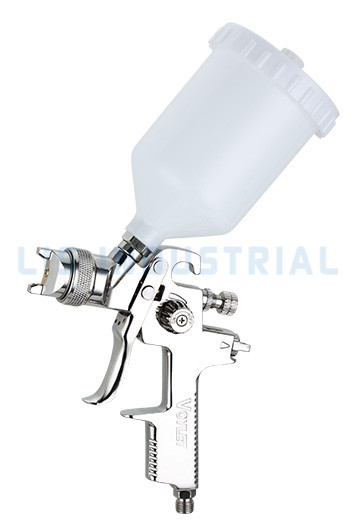
Catalog pages list feed type, nozzle size, and air consumption. The repair plan should decide which of those matters first. A full bumper refinish has different fluid demand from a door-edge blend, and a high-solid clear needs more consistent atomization than a thin sealer. A gravity-feed spray gun is the common starting point for panel repair because the cup sits above the nozzle, fluid feeds steadily at lower pressure, and cleaning is straightforward.
| Feed type | Where it fits | Strength | Trade-off |
|---|---|---|---|
| Gravity feed | Panel repair, basecoat, clearcoat, spot blending | Steady fluid flow, easy color changes, good for small to medium volumes | Cup size and angle can limit access in tight areas |
| Pressure feed | Production work, larger vehicles, remote cup setups | Consistent supply for high-volume spraying and flexible hose routing | More equipment to clean and maintain; pressure must be set carefully |
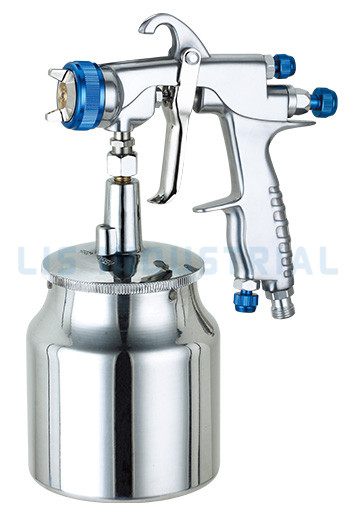
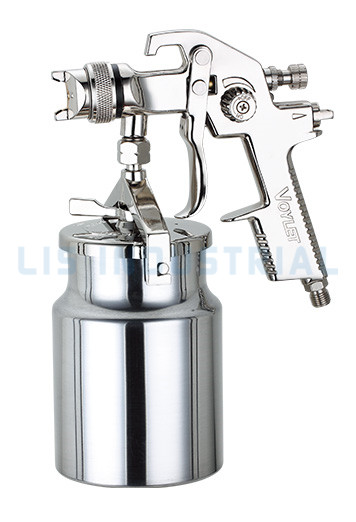
| Suction feed | General-purpose work, thicker materials in some shops | Familiar design and broad material compatibility | Fluid flow is less consistent as the cup empties; heavier cleanup |
For a general repair bay, a gravity-feed HVLP with a 1.3 mm nozzle and a spare 1.7 mm setup covers most basecoat, clearcoat, and primer work without forcing the painter to change platforms. That combination is more useful than a single “universal” gun because primer and clear demand different fluid volumes, and switching nozzles on one body is faster than switching entire guns during a busy day.
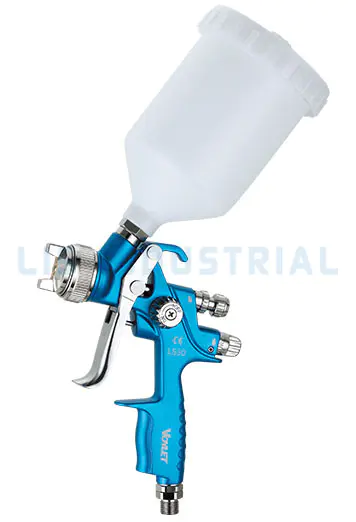
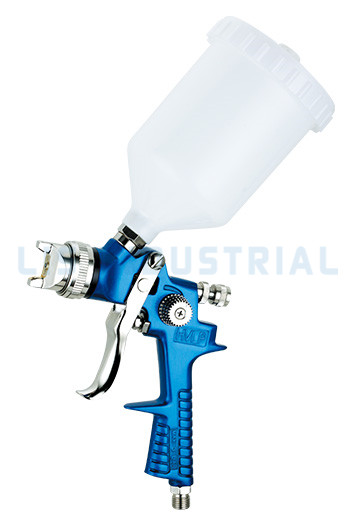
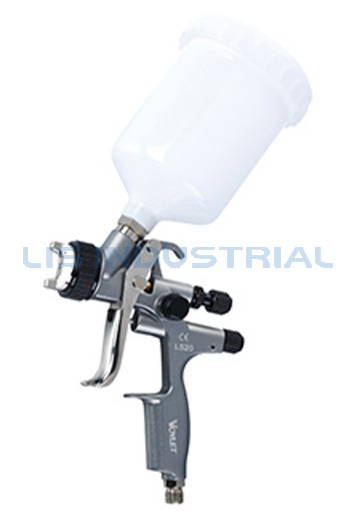 LS20 HVLP Spray Gun with 1.3 mm and 1.7 mm NozzlesA gravity-feed HVLP option for basecoat, clearcoat, and primer work, with 600 ml cup and two nozzle sizes for repair-bay flexibility.View Product →
Before buying, confirm that replacement needles, nozzles, air caps, and cup seals are available. A gun with no rebuild path becomes a disposable tool, which is expensive in a shop that sprays every week.
Where finish quality is actually decided
Most finish defects are created before the trigger is pulled. The fluid tip and needle control material volume; the air cap shapes the fan; the regulator sets working pressure; and the painter controls distance, speed, and overlap. A worn needle or a partially blocked air cap can make a good gun behave like a poor one, so cleaning and inspection matter as much as the specification sheet.
A 1.3 mm setup may be right for clearcoat, but it will feel starved on a high-build primer if the painter tries to compensate with more pressure. Extra pressure does not fix low fluid volume; it usually adds overspray and dry spray. The better move is to change the fluid tip and needle, then reset the fan and pressure with a test panel.
Nozzle size and air pressure: the balance that prevents rework
Coating makers publish recommended nozzle and pressure ranges for a reason. Use their technical data sheet as the final authority, but the chart below shows common starting windows used in refinish work. Treat the numbers as a setup direction, not a guarantee, because viscosity, temperature, reducer, and gun design all shift the result.
At the gun, working pressure is not the same as compressor tank pressure. Measure at the gun inlet with the trigger open and the air flowing. If the gun needs a higher inlet pressure to atomize a material, check fluid viscosity, air cap condition, and hose diameter before turning up the regulator. A restricted hose or a small compressor that cannot sustain air volume will cause pressure drop and uneven coverage.
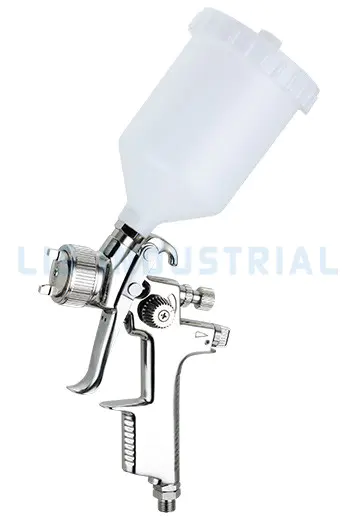
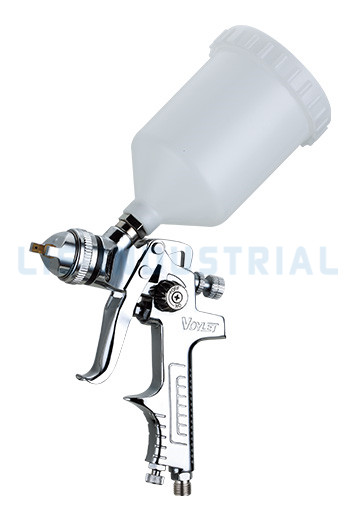
 LS40 HVLP Spray Gun with Multiple Nozzle SizesA full-size forged-aluminium HVLP gun with 1.0–2.2 mm nozzle options, 430 L/min air use and ≤500 g gravity body for consistent finish work.View Product →
For shops that run clearcoat most of the day, a dedicated full-size HVLP body with available 1.2–1.4 mm sets is easier to keep consistent than a gun that is constantly converted between primer and finish. The cost is usually recovered in fewer test panels and less solvent used for cleaning between incompatible materials.
A buying checklist for collision shops and serious DIY painters
- Confirm that the gun has multiple nozzle and needle sets, or that the exact sizes you need are in stock.
- Check air consumption at working pressure, not just the maximum tank pressure of the compressor.
- Inspect trigger feel and balance with a full cup; fatigue matters on a full panel.
- Plan separate guns for primer and clearcoat to avoid contamination and extra cleaning.
- Look for common thread sizes, quick couplers, and replacement cup lids that match your shop setup.
- Ask whether rebuild kits, air caps, and seals are available as normal service parts.
If your work involves high-volume output, remote cups, or longer hose runs, a pressure-feed spray gun can be more stable than a gravity gun. For spot repairs, a small touch-up gun with a tight fan is often more useful than turning down a full-size gun and hoping the blend stays narrow.
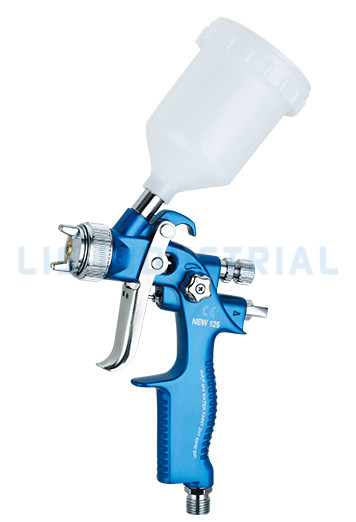
 F2 Mini Gravity-Feed Touch-Up Spray Gun with 0.5 mm NozzleA compact 0.5 mm gravity-feed touch-up gun with 125 ml cup and 50 PSI inlet, suited to spot repairs and narrow blends.View Product →
Buy the gun that matches the work you actually do most weeks. A shop that mostly repairs two or three panels per day should prioritize a repeatable 1.3 mm clearcoat gun and a primer gun, not a large production setup that is awkward to clean for small jobs.
Auto body paint spray gun FAQ
Q1: What size spray gun tip is best for auto body paint?
For basecoat and clearcoat, 1.2–1.4 mm is a common starting range. Primer surfacer usually needs 1.7–2.0 mm. Always confirm with the coating maker’s data sheet.
Q2: Can I use an HVLP spray gun for car painting?
Yes. HVLP guns are widely used in collision repair, but they need enough air volume at the gun inlet and the correct nozzle, pressure, and technique to atomize properly.
Q3: What compressor CFM do I need for an auto body paint spray gun?
Match the compressor’s delivered CFM at working pressure to the gun’s air consumption. Tank size alone does not tell you whether the compressor can sustain a full panel.
Q4: How do I reduce orange peel with an auto body paint spray gun?
Check viscosity, working pressure, distance, speed, and overlap. A worn air cap or an incorrect reducer can also cause peel, so test on a panel before spraying the vehicle.
Q5: Gravity feed vs suction feed: which is better for auto body painting?
Gravity feed is common for panel repair because fluid flow is steady and cleaning is easier. Suction feed still works for some general-purpose jobs but is less consistent as the cup empties.
Q6: How often should I clean an auto body paint spray gun?
Clean it after every session. Flush the fluid path, clean the air cap and nozzle carefully, and inspect the needle. Do not soak seals in strong solvent unless the manufacturer allows it.