 Search
 English
 中文简体
中文简体 Deutsch
 Español
Content
- 1 What Is an Air Spray Paint Gun?
- 2 Types of Spray Guns: HVLP, LVLP, Gravity Feed, and Siphon Feed
- 3 Main Features and Benefits of Heavy Duty Spray Guns
- 4 Spray Gun Setup Guide
- 5 Air Pressure and Nozzle Size Selection
- 6 About Ningbo Lis Industrial Co., Ltd.
- 7 Cleaning and Maintenance of Air Spray Paint Guns
- 8 Applications of Heavy Duty Air Spray Paint Guns
- 9 Frequently Asked Questions
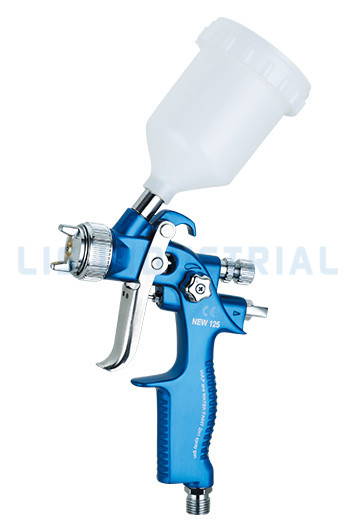
A Heavy Duty Air Spray Paint Gun is a pneumatically powered finishing tool that atomizes liquid coating materials — paint, primer, lacquer, varnish, or stain — into a fine mist for application onto surfaces. By forcing compressed air through a nozzle alongside the coating material, the gun breaks the liquid into millions of microscopic droplets, producing a smooth, even film that is difficult to replicate with brushes or rollers. For professional and industrial applications, a correctly specified Air Spray Paint Gun delivers superior finish quality, consistent coverage, and significantly faster application speeds compared to manual methods.
The defining characteristic of a heavy duty design is its ability to handle high material throughput, withstand prolonged continuous use, and atomize a wider range of coating viscosities — including high-solids paints, epoxies, and industrial coatings — without performance degradation. These guns are built with reinforced body castings, precision-machined fluid passages, and industrial-grade needle and nozzle sets that maintain their geometry under thermal and mechanical stress. Whether finishing automotive bodywork, coating industrial machinery, or applying architectural finishes, the Professional Spray Gun remains the tool of choice for operators who require repeatable, high-quality results.
What Is an Air Spray Paint Gun?
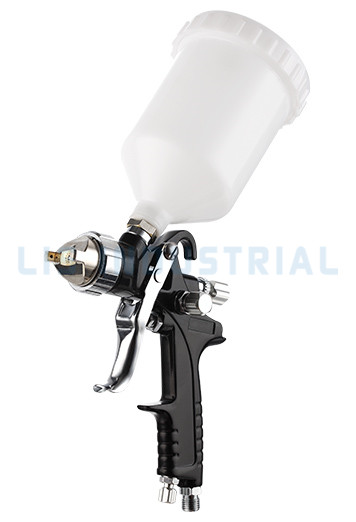
An Air Spray Paint Gun — also called a Pneumatic Spray Gun — operates by connecting to a compressed air supply, typically between 15 and 90 PSI depending on the gun type and application. The air passes through the gun body and exits through an air cap surrounding the fluid nozzle. As paint flows from the cup through the fluid needle and nozzle, the high-velocity air stream shears the liquid into fine droplets and shapes the spray fan using horn-shaped air jets on either side of the air cap.
Three primary controls on a spray gun govern the finish quality: the fluid control knob (regulates how far the needle retracts, controlling paint volume), the fan control knob (adjusts the width of the spray pattern from round to wide oval), and the air pressure regulator (controls atomization fineness). Mastering the interaction between these three controls — along with gun-to-surface distance and travel speed — is what separates a professional finish from an amateurish one.
A typical heavy duty spray gun features a body forged from die-cast aluminum or zinc alloy, a stainless steel fluid needle and nozzle for corrosion resistance and dimensional stability, PTFE-lined fluid passages to resist solvent attack, and ergonomic trigger designs that reduce operator fatigue during extended sessions. Air consumption for heavy duty models typically ranges from 4 to 14 CFM, necessitating a compressor with adequate delivery capacity.
| Table 1: Air Spray Paint Gun Key Specifications at a Glance | ||
| Parameter | Typical Range | Notes |
| Operating Air Pressure | 15 – 90 PSI | Type-dependent (HVLP vs conventional) |
| Air Consumption | 4 – 14 CFM | HVLP uses more CFM at lower PSI |
| Nozzle Size | 0.8 – 2.5 mm | Matched to coating viscosity |
| Cup Capacity | 200 mL – 1,000 mL | Gravity vs siphon feed |
| Transfer Efficiency | 65 – 92% | HVLP achieves highest TE |
| Spray Fan Width | 50 – 320 mm | Adjustable via fan control knob |
Types of Spray Guns: HVLP, LVLP, Gravity Feed, and Siphon Feed
Selecting the right spray gun type is the first and most consequential decision a painter makes. Each technology delivers different trade-offs between transfer efficiency, air consumption, finish quality, and suitable applications.
HVLP (High Volume Low Pressure)
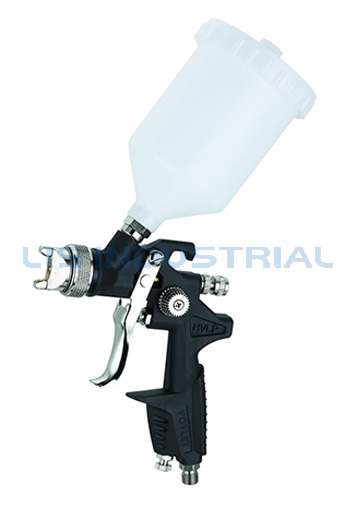
HVLP Spray Guns operate with high air volume but low atomization pressure — typically 10 PSI or less at the air cap. This low cap pressure dramatically reduces overspray and bounce-back, resulting in transfer efficiencies of 75 to 92%. HVLP technology was originally developed to comply with VOC emission regulations in the automotive finishing industry. Today, HVLP guns are the preferred choice for automotive topcoats, cabinet finishing, furniture lacquering, and any application where material waste and environmental impact are critical considerations. Air consumption typically ranges from 10 to 14 CFM, requiring a capable compressor.
LVLP (Low Volume Low Pressure)
LVLP spray guns combine the efficiency benefits of HVLP with significantly lower air volume requirements — typically 4 to 7 CFM — making them compatible with smaller portable compressors. While transfer efficiency (65–80%) is slightly lower than HVLP, LVLP guns are highly practical for workshops, small body shops, and field repair work where compressor capacity is limited. They are particularly effective with medium-viscosity coatings and waterborne paints.
Gravity Feed Spray Guns
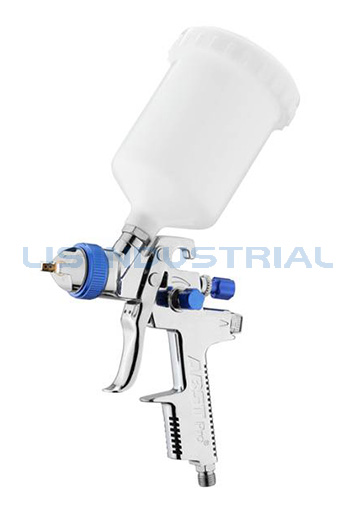
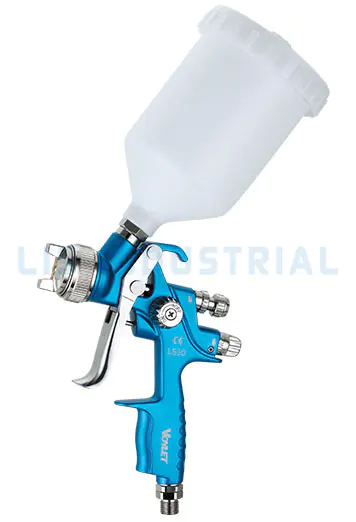
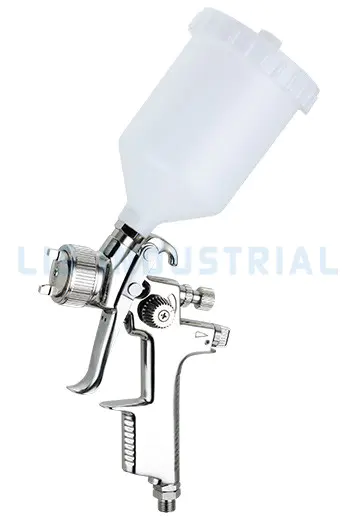
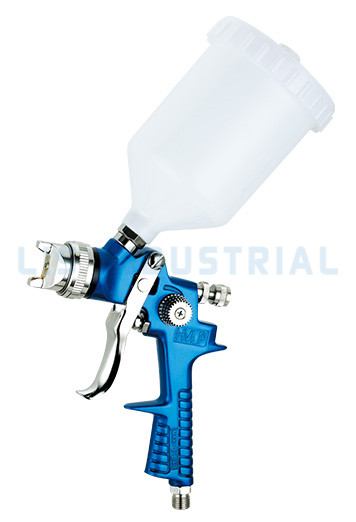
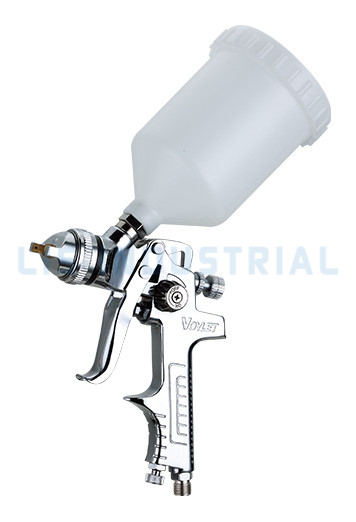
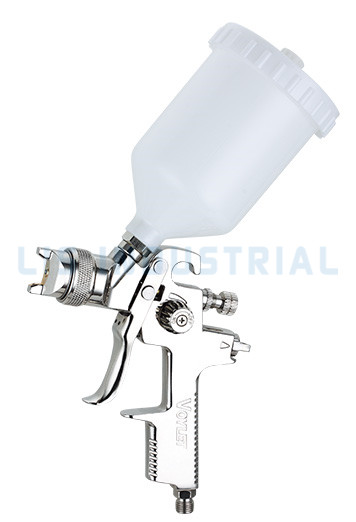
Gravity Feed Spray Guns mount the paint cup on top of the gun body, allowing gravity to assist material flow into the fluid passage. This design requires less air pressure to pull paint through the system, improving atomization consistency at lower pressures. Cup capacities typically range from 200 mL to 600 mL. Gravity feed guns are the dominant choice in professional automotive finishing, detail painting, and any work requiring frequent color changes — the top-mounted cup is easier to clean and minimizes residual paint waste.
Siphon Feed Spray Guns
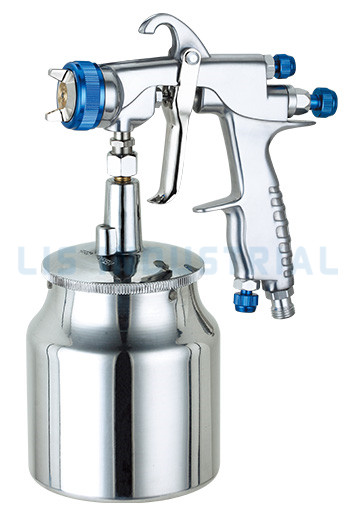
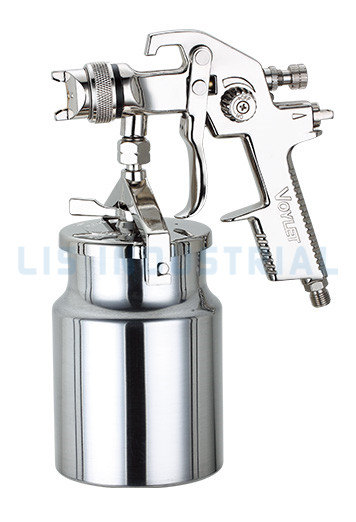
Siphon feed designs position the paint cup below the gun body. A venturi effect created by the passing airstream draws paint upward from the cup through the fluid tube. Siphon guns excel with larger cup capacities (up to 1,000 mL or more) and thicker materials, making them well-suited for Industrial Paint Spray Gun applications involving primers, industrial enamels, and rust preventive coatings. They require slightly higher operating pressures than gravity guns to generate adequate siphoning action.
The radar chart shows that HVLP leads decisively in transfer efficiency, finish quality, and low overspray — the three factors most critical to professional automotive and decorative finishing. LVLP offers a well-rounded profile with significantly better compressor compatibility, making it practical for smaller workshop setups without sacrificing too much finish quality. Siphon feed guns stand out for handling thick coatings and high material volumes, making them the natural choice for industrial priming and heavy-bodied coating applications where efficiency and coverage area are prioritized over fine finish detail.
Main Features and Benefits of Heavy Duty Spray Guns
Not all spray guns are created equal. A Heavy Duty Spray Gun distinguishes itself through design choices that sustain performance under demanding production conditions, reduce downtime, and ultimately lower the total cost of operation. The following features define a genuinely professional-grade tool.
- Precision-Machined Stainless Steel Fluid Passages: Stainless steel needles, nozzles, and fluid passages resist corrosion from solvent-borne and waterborne coatings alike. Tight dimensional tolerances on needle-to-nozzle fit — typically within ±0.01mm — ensure consistent fluid delivery and prevent dripping or spitting during operation.
- Micrometer Fluid Control: High-end guns feature indexed fluid control knobs that allow repeatable settings between spray sessions. Once a painter dials in the correct fluid output for a coating, they can restore that exact setting after cleaning — eliminating setup time on repeat jobs.
- Balanced, Ergonomic Body Design: Heavy duty spray guns are typically 20–30% lighter than industrial siphon guns of equivalent capacity, thanks to precision die-cast aluminum bodies. Balanced weight distribution reduces wrist fatigue during extended spraying sessions, which directly improves finish consistency as operator fatigue increases unsteadiness.
- High Transfer Efficiency: Achieving transfer efficiency above 75% means less coating wasted as overspray — a direct material cost saving. For a painter applying 5 liters of topcoat per day, the difference between 65% and 85% TE represents 1 liter of saved material per session, translating to significant annual savings in professional operations.
- CE and GS Certified Safety: Certified heavy duty spray guns comply with European safety standards for pneumatic tools, confirming that electrical, mechanical, and pressure-related safety requirements have been independently validated — a mandatory consideration for professional workshops and export markets.
- Wide Coating Compatibility: Heavy duty guns accommodate the full range of modern coatings — solvent-borne enamels, waterborne basecoats, epoxy primers, urethane clearcoats, and high-solids coatings — without requiring a different gun for each product type, provided the correct nozzle size is selected.
This column chart compares the transfer efficiency (the percentage of coating material that actually reaches the target surface) across different spray gun technologies. Conventional spray guns waste nearly half the material as overspray, while HVLP gravity feed guns achieve transfer efficiencies approaching 88% — directly reducing material costs and airborne VOC emissions. For industrial operations running multiple spray booths, the efficiency gap between conventional and HVLP technology translates to thousands of dollars in annual coating material savings.
Spray Gun Setup Guide
Setting up a spray gun correctly before beginning any finishing job is essential to achieving a consistent, defect-free result. Skipping or rushing setup is the single most common reason for runs, orange peel, dry spray, and uneven coverage. The following sequence applies to both HVLP and LVLP guns in professional finishing environments.
- Thin the Coating to the Correct Viscosity: Measure paint viscosity using a viscosity cup (Ford #4 or Zahn cup). Most topcoats spray optimally at 18–25 seconds Ford #4. Add thinner incrementally in 5% increments, stirring and testing between additions. Over-thinning reduces hiding power and can cause sagging.
- Select and Install the Correct Nozzle Set: Match the nozzle size to the coating viscosity (see the nozzle selection section below). Ensure the needle, nozzle, and air cap are all from the same matched set — mismatched components cause spitting, uneven fans, and premature wear.
- Set Air Pressure at the Gun Inlet: Attach an in-line pressure gauge at the gun inlet. Set pressure according to the gun manufacturer's specification for the coating type — typically 26–29 PSI for HVLP topcoats. Adjust at the regulator, not by partially closing the air valve on the gun.
- Adjust Fan Width: Turn the fan control knob to full open. Spray a test pattern on paper held 15–20 cm from the nozzle. The pattern should be an even ellipse approximately 250–300 mm wide. Close the fan knob in ½-turn increments to reduce fan width for detail work or narrow panels.
- Set Fluid Output: Open the fluid knob to the fully open position, then close by 1.5 to 2.5 turns as a starting point. Spray a test panel and observe the wet film thickness. Increase fluid output if coverage is thin; reduce if runs appear within 2 minutes of application.
- Validate Spray Technique: Hold the gun 15–25 cm from the surface (varies by gun type and coating), move at a consistent speed of approximately 30–50 cm per second, and overlap each pass by 50%. Trigger the gun before the pass begins and release after it ends to prevent buildup at panel edges.
Air Pressure and Nozzle Size Selection
Spray Gun Air Pressure and Spray Gun Nozzle Size are the two most technically critical variables in spray gun specification. An incorrect combination produces defects that are difficult to diagnose and impossible to correct after the coating has cured.
Nozzle size (also called fluid tip size) is measured in millimeters and refers to the internal diameter of the fluid orifice. A smaller nozzle produces a finer mist suitable for thin, low-viscosity coatings; a larger nozzle is required to pass high-viscosity or high-solids materials without spitting. Using a nozzle that is too small for the coating viscosity causes the gun to spit, while a nozzle that is too large delivers excessive fluid that overwhelms the atomizing air and produces a coarse, wet spray.
| Table 2: Nozzle Size and Air Pressure Guide by Coating Type | |||
| Coating Type | Nozzle Size | HVLP Inlet PSI | Conventional PSI |
| Waterborne Basecoat | 1.2 – 1.3 mm | 26 – 29 PSI | 40 – 50 PSI |
| Urethane Clearcoat | 1.3 – 1.4 mm | 26 – 30 PSI | 45 – 55 PSI |
| 2K Epoxy Primer | 1.6 – 1.8 mm | 28 – 32 PSI | 50 – 60 PSI |
| High-Build Primer Surfacer | 1.8 – 2.0 mm | 30 – 35 PSI | 55 – 65 PSI |
| Industrial Enamel / Rust Paint | 2.0 – 2.5 mm | 32 – 40 PSI | 60 – 80 PSI |
| Lacquer / Stain | 0.8 – 1.2 mm | 22 – 26 PSI | 35 – 45 PSI |
This line chart illustrates that finish quality does not improve linearly with increasing air pressure — it peaks within an optimal window and then declines. Below approximately 22 PSI, atomization is insufficient and the finish appears coarse or orange-peel textured. Above 34 PSI in HVLP applications, excessive air velocity increases overspray, causes dry spray particles to land on the wet film, and introduces turbulence that disturbs the applied coating before it flows out. The optimal pressure zone of 26–34 PSI inlet delivers the finest atomization and smoothest finish for most HVLP automotive and industrial spray gun applications.
About Ningbo Lis Industrial Co., Ltd.
Ningbo Lis Industrial Co., Ltd. is an advanced China Heavy Duty Spray Gun manufacturer and factory, offering a comprehensive range of Air Spray Paint Guns, Pneumatic Spray Guns, and associated finishing equipment. All products carry CE and GS certifications, confirming compliance with European safety and performance standards — a prerequisite for professional workshop and industrial market acceptance.
Lis Industrial maintains a strong internal R&D team dedicated to continuous product development and engineering refinement. The company offers full OEM and ODM services, accommodating customers who require custom gun configurations, private-label branding, or application-specific modifications based on customer-supplied drawings or samples. This engineering flexibility enables Lis to serve both volume OEM customers and specialist distributors requiring tailored solutions.
Quality is the central pillar of Lis Industrial's market strategy. The company pursues the highest manufacturing standards across every stage of production — from raw material sourcing and precision machining of fluid components to final assembly and quality inspection. Heavy Duty air spray paint guns from Lis are fully customizable to customer specifications, supporting unique nozzle configurations, cup sizes, trigger designs, and body materials.
Lis Industrial has established a worldwide marketing and service network, with products widely distributed across Europe, North America, the Middle East, South Africa, and East Asia. Long-term business relationships in these regions reflect consistent product reliability and responsive commercial support. For distributors, OEM partners, and industrial buyers seeking a dependable supply of professional-grade finishing equipment, Lis Industrial offers a proven manufacturing foundation backed by independent quality certification.
Cleaning and Maintenance of Air Spray Paint Guns
A spray gun is a precision instrument, and its longevity is almost entirely determined by the quality of cleaning and maintenance performed after each use. Dried paint inside the fluid passages, a damaged needle tip, or a scored nozzle seat will degrade atomization and finish quality long before the gun's mechanical life is exhausted. Proper cleaning takes 10 to 20 minutes — a minor investment compared to the cost of premature component replacement or a failed finish job.
- Flush Immediately After Use: Pour the remaining paint from the cup and add a small amount of compatible solvent (lacquer thinner for solvent-borne, clean water for waterborne). Spray this through the gun until it exits clear. This prevents paint from skinning inside the fluid passages during disassembly.
- Disassemble Fluid Components: Remove the needle, nozzle, and air cap. Soak in the appropriate solvent for 10–15 minutes. Use only soft-bristle brushes or non-metallic picks to clean orifices — never metal wire or drill bits, which scratch nozzle bores and permanently damage atomization geometry.
- Clean the Air Cap Holes: The small air cap holes that shape the fan pattern are particularly prone to partial blockage from dried overspray. Soak and use a toothpick or soft bristle to clear each hole. Even partial blockage of one horn hole will produce an asymmetric spray pattern that causes uneven film thickness.
- Inspect and Lubricate the Needle Packing: Apply a small drop of petroleum jelly or manufacturer-recommended packing lubricant to the needle packing every 50–100 spray sessions. Dry packing causes the needle to drag, resulting in inconsistent fluid delivery and trigger response.
- Inspect for Wear at Each Cleaning: Visually inspect the needle tip for bending or burring, the nozzle seat for scoring, and the air cap for cracks or deformation. Replace worn components proactively — a replacement nozzle set costs a fraction of a finish repair or a failed customer job.
Inadequate cleaning after use accounts for 42% of all spray gun performance issues, making it by far the most impactful maintenance variable under the operator's direct control. Incorrect nozzle or pressure selection is the second leading cause, responsible for 25% of failures — highlighting the importance of matching gun setup to coating specification before starting work. Together, these two preventable causes account for over two-thirds of all spray gun performance degradation, underscoring that most gun problems are maintenance and setup issues rather than product defects.
Applications of Heavy Duty Air Spray Paint Guns
The Industrial Paint Spray Gun and its professional counterpart serve an extraordinarily diverse range of finishing applications. The common thread is the need for a consistent, high-quality coating film applied efficiently and repeatably across varied surface geometries.
- Automotive Refinishing: Automotive Spray Guns are used at every stage of vehicle repair and refinishing — from applying weld-through primer and epoxy sealer over bare metal, to spraying waterborne basecoats and solvent-borne clearcoats on body panels. Modern automotive finishing requires guns capable of producing surface profiles below Ra 0.5 micron — a level of smoothness that is only achievable with properly set-up professional spray equipment.
- Industrial Equipment and Machinery Coating: Production line spray booths use heavy duty guns to apply corrosion-resistant primers, topcoats, and specialty functional coatings (heat-resistant, anti-static, chemical-resistant) to manufactured components. High material throughput and reliability in continuous duty cycles are the primary requirements in these environments.
- Woodworking and Furniture Finishing: Cabinet shops, furniture manufacturers, and wood finishing contractors rely on HVLP and LVLP spray guns to apply lacquers, water-based finishes, UV coatings, and stains. The low overspray and fine atomization of HVLP technology make it particularly suited to finishing intricate joinery and decorative wood surfaces.
- Metal Fabrication and Structural Steelwork: Fabricators apply zinc-rich primers, epoxy coatings, and polyurethane topcoats to structural steel, handrails, machine frames, and enclosures using heavy duty siphon feed guns that can handle high-viscosity, high-build materials at production speeds.
- Agricultural and Construction Equipment: OEM manufacturers of tractors, excavators, and construction equipment use automated and manual spray lines equipped with industrial spray guns to apply multi-layer corrosion protection systems that must withstand outdoor exposure for 10 to 20 years.
- Marine and Offshore Coating: Marine-grade epoxies, antifouling coatings, and topside enamels require spray guns that can handle thick, fast-setting materials in outdoor conditions. Stainless steel fluid passages and solvent-resistant seals are essential for reliable performance with marine coating systems.
Frequently Asked Questions
Q1: What size compressor do I need to run an HVLP spray gun?
Most HVLP Spray Guns require between 10 and 14 CFM at 40 PSI at the compressor outlet. A typical workshop compressor delivering this flow will have a tank capacity of at least 50 liters and a motor of 2–3 HP. Always check the gun's specific CFM requirement and match it to the compressor's rated free air delivery (FAD), not just the tank volume. Running an HVLP gun on an undersized compressor causes pressure drops mid-spray that create an uneven finish.
Q2: What nozzle size should I use for automotive clearcoat?
For most solvent-borne urethane and acrylic clearcoats, a 1.3 to 1.4 mm nozzle is the standard recommendation. This size provides adequate fluid delivery for good coverage while maintaining fine atomization for a smooth finish. If the clearcoat is a high-solids formulation (above 50% solids by volume), consider a 1.4 to 1.5 mm nozzle to prevent spitting caused by the higher viscosity. Always check the coating manufacturer's application guide for their specific nozzle recommendation.
Q3: Why is my spray gun spitting or producing an uneven pattern?
Spitting is most commonly caused by a loose or damaged nozzle, a worn needle tip that doesn't seat properly, or paint that is too thick for the nozzle size in use. An uneven fan pattern (heavy on one side, or a crescent shape) usually indicates a partially blocked air cap horn hole — soak the air cap in solvent and use a toothpick to clear each hole individually. If the pattern is heavy in the center, reduce fluid output or increase fan width. Always check that the nozzle, needle, and air cap are a matched set.
Q4: Can I use an air spray gun for waterborne paints?
Yes, but the gun must have stainless steel fluid passages, needle, and nozzle. Waterborne paints are mildly corrosive to non-stainless steel components and will cause rust contamination that ruins finishes. HVLP guns are particularly well-suited to waterborne coatings because their lower cap pressure reduces the evaporation of water from the atomized droplets — preventing dry spray that is a common problem when applying waterborne coatings with conventional high-pressure guns. Always clean immediately after use with clean water followed by a flushing with a waterborne-compatible cleaning solution.
Q5: What is the difference between a gravity feed and siphon feed spray gun?
A Gravity Feed Spray Gun has the paint cup mounted on top, using gravity to deliver paint to the fluid passage — resulting in lower operating pressure requirements and easier cleaning due to the top-mounted cup design. A siphon feed gun has the cup below the gun body, using air pressure differential to draw paint upward. Gravity feed guns are preferred for fine finishing and automotive work because of their excellent atomization at low pressures and easier color changes. Siphon feed guns suit industrial applications requiring large paint volumes and thicker materials.
Q6: How often should I replace the nozzle and needle on my spray gun?
Replacement frequency depends on the abrasiveness of coatings being sprayed and usage intensity. For standard automotive coatings, inspect the needle tip and nozzle seat at each cleaning. Signs that replacement is needed include a visible notch or flat spot on the needle tip, leaking from the needle packing that persists after adjustment, or an inability to produce a consistent, symmetrical spray pattern. In high-volume production environments spraying abrasive coatings, nozzle sets may need replacement every 3 to 6 months. Using a nozzle past its service life wastes far more in coating material and rework than the cost of a replacement set.