 Search
 English
 中文简体
中文简体 Deutsch
 Español
Spray guns are indispensable tools in painting work, widely used in automotive painting, furniture coating, wall painting, and industrial spraying. A qualified spraying effect requires not only a uniform coating but also a smooth, even surface without sagging. However, uneven spraying is a common problem when using spray guns, which not only affects the painting effect but can also waste paint, prolong working time, and even prevent the coating from fully curing.
So, why is the spraying uneven? How can we adjust the spray gun to solve these problems? This article will take you through the reasons for uneven spraying and provide some practical adjustment techniques to make your spraying results more perfect.
1. Common Causes of Uneven Spraying
Improper Spray Gun Pressure Setting
The pressure of the spray gun directly affects the amount of paint sprayed and the spraying effect. If the spray gun pressure is too high or too low, it will lead to uneven spraying.
Too high pressure: The paint will be excessively atomized, resulting in very small particles, leading to uneven coverage and a "gritty" texture.
Too low pressure: Insufficient paint flow may cause color differences in the sprayed area, and the coating will be thicker, easily resulting in brush marks and sagging.
Clogged Spray Gun Nozzle or Tip
After using the spray gun for a period of time, paint or solvent may accumulate in the spray gun nozzle, causing clogging. This will affect the spray pattern of the spray gun, leading to uneven spraying.
Clogging: A clogged nozzle will cause unstable paint flow, resulting in uneven spraying and even intermittent spraying.
Inconsistent Spraying Distance
If the distance between the spray gun and the surface being sprayed is inconsistent, it can lead to uneven paint coverage.
Too far: If the spray gun is too far from the surface, the sprayed paint will be excessively atomized, making it difficult for the paint particles to concentrate, resulting in an uneven coating.
Too close: If the spray gun is too close, the paint flow will be too high, potentially causing the paint to be too thick and resulting in sagging.
Inconsistent Spraying Angle
The spraying angle of the spray gun also affects the spraying effect. If the spray gun angle is incorrect, the paint distribution will be uneven, leading to color differences or incomplete coverage.
Inappropriate Paint Viscosity
The viscosity of the paint greatly affects the spraying effect. Viscosity that is too high or too low will result in poor spraying results.
Too high viscosity: The paint is too thick, resulting in insufficient paint flow during spraying, easily leading to uneven spraying and inconsistent coating thickness.
Too low viscosity: The paint is too thin, making it difficult for paint particles to adhere to the surface during spraying, easily causing insufficient spraying and uneven coverage.
Environmental Factors
Environmental factors such as temperature and humidity also affect the spraying effect of the paint. At high temperatures or high humidity, the drying speed of the paint changes rapidly, which may lead to uneven surfaces, especially in fast-drying situations.
Unskilled Spraying Technique
Spraying technique requires a certain amount of experience. The operator's hand movements, speed, and spraying angle all affect the uniformity of the coating. Especially when spraying large areas, inconsistent movements can lead to uneven coatings.
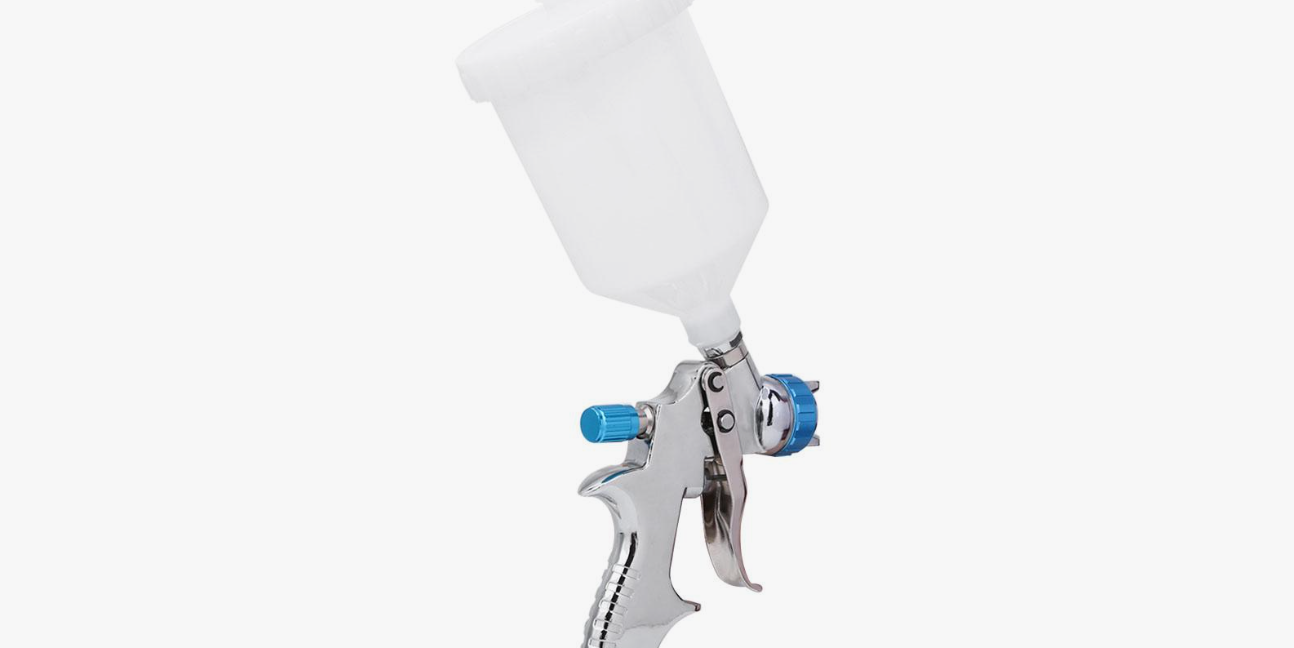
2. How to adjust the spray gun to solve the problem of uneven spraying?
Adjusting the Spray Gun Pressure
Properly adjusting the spray gun pressure is key to ensuring even spraying. Set the appropriate pressure value according to different paint types and work requirements.
For water-based paints, a pressure of 2.5–3 bar is generally recommended.
For oil-based paints or automotive paints, the pressure can be increased appropriately, usually between 3–4 bar.
Suggestion: When adjusting the spray gun pressure, you can first perform a small-scale test to check the spraying effect, and gradually adjust until a uniform coating is obtained.
Cleaning the Spray Gun Nozzle and Tip
Regularly clean the spray gun to ensure that the nozzle is not clogged. Use appropriate cleaning agents or solvents to clean the nozzle and tip of the spray gun to prevent paint buildup. Cleaning is especially important when switching paint colors or materials.
Suggestion: Thoroughly clean the spray gun after each spraying session. Especially when changing paint, thoroughly remove any paint residue from inside the nozzle.
Controlling the Spraying Distance
Maintain an appropriate distance between the spray gun and the surface being sprayed during spraying. Generally, the spray gun should be held at a distance of 15-25 centimeters. Too far or too close will affect the uniformity of the coating.
Recommendation: Control the spraying distance by maintaining a stable and consistent hand position while holding the spray gun. Use a ruler or visual estimation to ensure the distance is the same for each spray pass.
Optimize Spraying Angle
The angle of the spray gun also needs to be consistent. During spraying, ensure the spray gun is perpendicular to the surface and maintain a uniform angle throughout the process.
Recommendation: When spraying, try to use a straight-line motion parallel to the surface, avoiding unsteady hands or excessive angles.
Adjust Paint Viscosity
Adjust the paint viscosity to ensure it is suitable for spraying. Adjust the viscosity by adding an appropriate amount of solvent or thinner to ensure the paint sprays smoothly without causing thick coatings or sagging.
Recommendation: Before each use, test the paint viscosity with a viscosity cup to ensure it meets the spraying requirements. Generally, the paint viscosity should be moderate, neither too thick nor too thin.
Control Environmental Factors
When spraying, try to control the temperature and humidity of the spraying environment. Maintain a temperature range of 20-25°C and ensure moderate humidity. This helps the paint dry evenly and avoids uneven coatings caused by rapid drying.
Recommendation: When spraying indoors, avoid direct sunlight and strong winds. Use a humidifier or air conditioner to regulate temperature and humidity to ensure optimal spraying results.
Improve Spraying Technique
Spraying technique and handling directly affect the spraying results. Mastering the correct spraying posture and hand movements, maintaining the stability of the spray gun, and ensuring consistent hand speed and angle during spraying can greatly improve the uniformity of the coating.
Recommendation: Improve your skills through practice, adjusting hand movements and spraying techniques. Conduct several small-scale tests before spraying to adjust to the optimal state.