 Search
 English
 中文简体
中文简体 Deutsch
 Español
Content
- 1 What Core Differences Between Woodworking and Metal Polishing Dictate Air Sander Choice?
- 2 What Air Sander Types Work Best for Common Woodworking Tasks?
- 3 What Air Sander Types Are Optimized for Metal Polishing Projects?
- 4 How Do Sanding Media and Pads Differ Between Woodworking and Metal Polishing?
- 5 What Key Features Should You Prioritize for Woodworking vs. Metal Polishing Sanders?
- 6 How to Avoid Common Mistakes When Choosing Air Sanders for These Projects?
- 7 Conclusion: Matching Air Sanders to Project Goals for Best Results
What Core Differences Between Woodworking and Metal Polishing Dictate Air Sander Choice?
Woodworking and metal polishing place fundamentally different demands on air sanders, rooted in the unique properties of each material and the desired end result. Wood is a porous, relatively soft material that requires sanders to remove material gradually, smooth grain, and prepare surfaces for finishes (e.g., paint, stain) without causing splintering or tear-out. Metal, by contrast, is dense and hard—polishing projects focus on removing scratches, rust, or oxidation, and achieving a uniform, reflective shine, which demands more aggressive abrasion or finer buffing.
These differences translate to non-negotiable sander requirements: woodworking needs tools that prioritize control and grain refinement, while metal polishing relies on power, abrasion consistency, and compatibility with metal-specific media. Choosing a one-size-fits-all air sander often leads to subpar results—e.g., a sander too aggressive for wood may gouge surfaces, while one too gentle for metal will fail to remove imperfections.
What Air Sander Types Work Best for Common Woodworking Tasks?
Woodworking tasks range from rough material removal (e.g., shaping lumber) to fine finishing (e.g., smoothing cabinet doors), and each requires a specialized air sander type:
1. Orbital Air Sanders: Ideal for General Wood Smoothing?
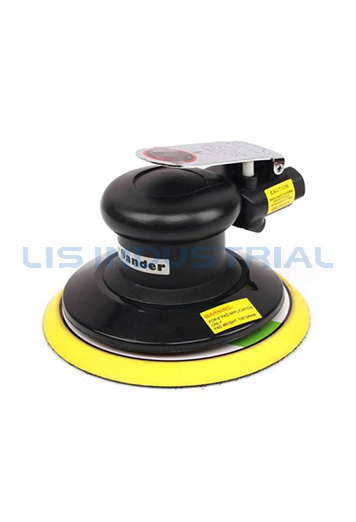
Yes—orbital air sanders (also called random orbital sanders) are the workhorses of woodworking. They use a combination of circular and orbital motion to sand without leaving swirl marks, making them perfect for preparing flat or slightly curved wood surfaces (e.g., tabletops, drawer fronts). Their moderate sanding speed (8,000–12,000 orbits per minute, OPM) balances material removal with precision, and they accept sandpaper grits from 80 (for light shaping) to 400 (for pre-finish smoothing). For most woodworkers, an orbital air sander is the starting point for 70–80% of projects.
2. Belt Air Sanders: Necessary for Heavy-Duty Wood Shaping?
For rough tasks like removing large amounts of wood (e.g., flattening warped boards, shaping edges) or stripping old finishes, belt air sanders are essential. They use a continuous sanding belt (typically 3–4 inches wide) that moves at high speeds (1,500–3,000 feet per minute, FPM), enabling fast material removal. However, their aggressive action makes them unsuitable for fine finishing—they can easily gouge soft woods like pine or cedar if not handled carefully. They’re best reserved for initial shaping before switching to an orbital sander for smoothing.
3. Detail Air Sanders: Critical for Tight Woodworking Spaces?
Yes—detail air sanders (e.g., pencil sanders, delta sanders) are designed for narrow, curved, or hard-to-reach areas (e.g., chair spindles, cabinet corners) where larger sanders can’t fit. Their small, pointed or triangular pads accept fine-grit sandpaper (120–600 grit) and operate at moderate speeds (10,000–15,000 OPM), allowing precise sanding without damaging adjacent surfaces. For woodworking projects with intricate details, a detail air sander is non-negotiable.
What Air Sander Types Are Optimized for Metal Polishing Projects?
Metal polishing focuses on two key goals: removing surface defects (scratches, rust) and achieving a high-gloss finish. The right air sander depends on whether the project is in the “correction” phase (defect removal) or “finishing” phase (shining):
1. Dual-Action (DA) Air Polishers: Effective for Metal Defect Removal?
Dual-action air polishers (a variation of orbital sanders) are ideal for correcting metal surfaces. They combine orbital and spinning motion, allowing them to remove light to moderate scratches, oxidation, or paint residue without creating holograms (swirl marks common with high-speed polishers). They accept foam or wool pads paired with abrasive compounds (e.g., cutting compounds for heavy correction, polishing compounds for light smoothing) and operate at speeds of 8,000–12,000 OPM. For most metal projects—from automotive parts to household fixtures—DA polishers are the go-to for pre-finish correction.
2. High-Speed Air Buffers: Essential for Achieving Metal Shine?
To get a mirror-like finish on metal, high-speed air buffers are necessary. These tools operate at much higher speeds (1,500–3,000 rotations per minute, RPM) than DA polishers and use soft, high-quality wool or microfiber pads paired with fine polishing compounds. The high speed generates friction that smooths micro-scratches and brings out the metal’s natural luster. However, they require skill to use—too much pressure or uneven movement can create heat damage or holograms. They’re best for final finishing after defects have been removed with a DA polisher.
3. Angle Grinders with Polishing Attachments: Useful for Large Metal Surfaces?
For large, flat metal surfaces (e.g., steel plates, industrial equipment), angle grinders fitted with polishing attachments (e.g., flap discs, polishing wheels) are efficient. While angle grinders are typically associated with cutting or grinding, their high torque and speed (6,000–10,000 RPM) allow them to cover large areas quickly during the correction phase. However, they’re less precise than DA polishers and require a steady hand to avoid uneven sanding. They’re a practical choice for heavy-duty metal projects but not for small or intricate parts.
How Do Sanding Media and Pads Differ Between Woodworking and Metal Polishing?
The media (sandpaper, pads, compounds) used with an air sander is just as critical as the sander itself—and the choices for wood vs. metal are distinct:
1. Woodworking: What Sandpaper Grits and Pad Materials Should You Use?
Woodworking relies on aluminum oxide or garnet sandpaper (garnet is softer and better for fine wood, while aluminum oxide is more durable for rough shaping). Grit selection follows a clear progression:
- 40–80 grit: For belt sanders, used for heavy shaping or removing deep scratches.
- 120–240 grit: For orbital sanders, used for general smoothing and preparing surfaces for stain.
- 320–600 grit: For detail sanders or final orbital passes, used for pre-paint finishing or smoothing soft woods.
Pads for woodworking are typically made of foam or felt—foam pads (medium density) provide even pressure for flat surfaces, while felt pads (softer) conform to curved areas without causing damage.
2. Metal Polishing: What Compounds and Pad Materials Deliver the Best Shine?
Metal polishing uses abrasive compounds (not sandpaper, except for heavy rust removal) and specialized pads:
- Cutting compounds (coarse): Paired with wool pads on DA polishers, used to remove deep scratches or rust.
- Polishing compounds (medium): Paired with foam pads, used to refine the surface after cutting.
- Finishing compounds (fine): Paired with microfiber pads on high-speed buffers, used to achieve a mirror finish.
For heavy rust removal (e.g., on old metal parts), sandpaper discs (80–120 grit) can be used with a DA sander, but they must be followed by compound polishing to restore shine. Never use garnet sandpaper on metal—it wears too quickly and leaves fine scratches.
What Key Features Should You Prioritize for Woodworking vs. Metal Polishing Sanders?
Beyond type and media, specific sander features align with the needs of each project type:
1. For Woodworking: Which Sander Features Ensure Precision and Control?
- Variable Speed: Critical for adapting to different wood types—slower speeds (8,000 OPM) for soft woods (pine, cedar) to avoid tear-out, faster speeds (12,000 OPM) for hard woods (oak, maple) to cut through dense grain.
- Lightweight Design: Woodworking often requires holding the sander for extended periods; a sander weighing 2–3 pounds reduces fatigue and improves control.
- Dust Collection: Wood sanding generates large amounts of dust—look for sanders with built-in dust ports compatible with shop vacuums to keep workspaces clean and prevent dust from clogging sandpaper.
2. For Metal Polishing: Which Sander Features Prevent Damage and Boost Shine?
- Speed Stability: Metal polishing requires consistent speed—look for sanders with a regulated air flow system that maintains speed even under pressure, preventing heat buildup (which can warp thin metal) or uneven polishing.
- Ergonomic Grip: High-speed polishing demands steady control; a rubberized, non-slip grip reduces hand fatigue and ensures even pressure.
- Pad Compatibility: Ensure the sander accepts a range of pad sizes (e.g., 5-inch, 6-inch) and types (wool, foam, microfiber) to adapt to different metal surfaces (small parts vs. large panels).
How to Avoid Common Mistakes When Choosing Air Sanders for These Projects?
Even with the right knowledge, common pitfalls can lead to poor sander choices. Here’s how to avoid them:
- Mistake 1: Using a Metal Polisher for Woodworking: High-speed buffers or DA polishers with wool pads are too aggressive for wood—they can burn or gouge surfaces. Stick to wood-specific sanders (orbital, belt, detail) with sandpaper, not polishing compounds.
- Mistake 2: Using a Wood Sander for Metal Polishing: Orbital sanders with sandpaper will scratch metal rather than polish it. Metal requires polishers with compound-compatible pads (wool, foam) and higher speed capabilities.
- Mistake 3: Ignoring Air Pressure Requirements: All air sanders need a specific air pressure (typically 90 PSI) to operate correctly. Using a sander with a higher pressure requirement than your air compressor can deliver leads to weak performance—always check the sander’s CFM (cubic feet per minute) and PSI needs against your compressor’s specs.
Conclusion: Matching Air Sanders to Project Goals for Best Results
Choosing the right air sander for woodworking vs. metal polishing comes down to aligning the tool’s design with the material’s needs: woodworking demands control, gradual material removal, and compatibility with sandpaper, while metal polishing requires power, precision compound application, and high-speed buffing. By selecting the correct sander type (orbital for wood, DA polisher for metal correction), using material-specific media (sandpaper for wood, compounds for metal), and prioritizing key features (dust collection for wood, speed stability for metal), you’ll achieve professional-quality results. Remember: the best air sander isn’t the most powerful one—it’s the one tailored to your project’s unique demands.