 Search
 English
 中文简体
中文简体 Deutsch
 Español
Content
- 1 What Core Pressure Parameters Should Be Prioritized When Matching Air Fittings & Accessories?
- 2 Do Air Fittings & Accessories Need Different Matching Strategies for Low, Medium, and High-Pressure Pneumatic Systems?
- 3 How to Ensure Sealing Performance When Matching Air Fittings & Accessories to Different Pressure Requirements?
- 4 What Role Does Material Selection Play in Matching Air Fittings & Accessories to Pneumatic System Pressure?
Pneumatic systems are widely used in manufacturing, automotive maintenance, and automated production lines, with pressure requirements varying significantly across different application scenarios—from low-pressure systems (e.g., 0.2-0.5 MPa) for light-duty clamping to high-pressure systems (e.g., 1.0-3.0 MPa) for heavy-duty lifting. Air fittings and accessories (such as quick connectors, hoses, valves, and filters) are the "connections" of the pneumatic system; their proper matching with system pressure directly determines the safety, stability, and efficiency of the entire system. So, what key steps and considerations are involved in matching these components with different pressure requirements? Let’s explore through the following questions.
What Core Pressure Parameters Should Be Prioritized When Matching Air Fittings & Accessories?
When matching air fittings and accessories to a pneumatic system, two core pressure parameters must be the first focus: rated working pressure and maximum burst pressure of the components. The rated working pressure refers to the maximum pressure that the fitting or accessory can withstand stably during long-term normal operation, and it must be greater than or equal to the system’s designed working pressure. For example, if a pneumatic system for automated assembly has a designed working pressure of 0.8 MPa, the selected quick connectors and hoses must have a rated working pressure of at least 0.8 MPa—using components with a rated pressure of 0.6 MPa will lead to leakage or even structural failure under pressure. The maximum burst pressure is equally critical: it is the minimum pressure at which the component will rupture, and it is usually 3-5 times the rated working pressure. This parameter provides a safety buffer for unexpected pressure spikes (e.g., caused by valve misoperation or air compressor overpressure). For high-pressure systems (e.g., 2.0 MPa), components with a maximum burst pressure of at least 6.0 MPa should be selected to avoid dangerous bursts due to pressure fluctuations.
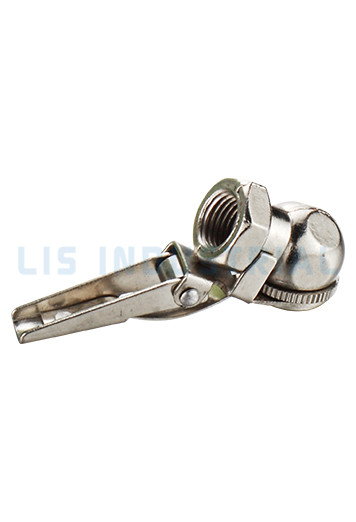
Do Air Fittings & Accessories Need Different Matching Strategies for Low, Medium, and High-Pressure Pneumatic Systems?
Yes, the matching strategies for air fittings and accessories vary significantly across low, medium, and high-pressure pneumatic systems, as their pressure-bearing requirements and application risks differ. For low-pressure systems (usually ≤ 0.5 MPa, such as pneumatic grippers in electronic product assembly), the focus is on lightweight and cost-effectiveness while ensuring basic pressure resistance. For example, quick connectors can be made of engineering plastics (with good corrosion resistance and low weight), and hoses can be made of PVC or nitrile rubber—these materials meet the pressure requirements and reduce the overall weight of the system. For medium-pressure systems (0.5-1.0 MPa, such as pneumatic cylinders in automobile welding lines), components need a balance of pressure resistance and durability. Metal quick connectors (e.g., brass or aluminum alloy) are more suitable here, as they have higher wear resistance than plastic ones; hoses should be made of reinforced rubber (with embedded fiber layers) to prevent expansion or deformation under medium pressure. For high-pressure systems (≥ 1.0 MPa, such as pneumatic presses in heavy machinery), safety and pressure resistance are the top priorities. Fittings should be made of high-strength metals (e.g., stainless steel or alloy steel) with precision machining to ensure tight connections; hoses must be high-pressure resistant types (e.g., spiral-wound steel wire reinforced hoses) that can withstand extreme pressure without cracking. Additionally, high-pressure systems require pressure relief valves (with a rated pressure matching the system) to prevent overpressure accidents.
How to Ensure Sealing Performance When Matching Air Fittings & Accessories to Different Pressure Requirements?
Sealing performance is a key factor in preventing air leakage—especially in high-pressure systems, where even tiny leaks can lead to pressure loss, reduced system efficiency, or safety hazards. The first step is to select the right sealing material based on pressure. For low-pressure systems, nitrile rubber or EPDM seals are sufficient, as they have good elasticity and low cost; for medium-pressure systems, fluororubber seals are better, as they have higher temperature and pressure resistance; for high-pressure systems, metal seals (e.g., copper or aluminum gaskets) or composite seals (rubber coated with metal) are required, as they can withstand extreme pressure without being crushed. The second step is to choose the appropriate sealing structure. Threaded fittings for low-pressure systems can use tape or thread sealant to enhance sealing; for medium and high-pressure systems, push-to-connect fittings with built-in O-rings (or face seals) are more reliable, as they form a tight seal through pressure-induced deformation of the seal. Additionally, installation torque must be controlled: over-tightening can damage the seal or fitting, while under-tightening can cause leakage. For example, when installing stainless steel threaded fittings in a 1.5 MPa system, the torque should be adjusted according to the fitting size (e.g., 15-20 N·m for 1/2-inch fittings) to ensure proper sealing without damage.
What Role Does Material Selection Play in Matching Air Fittings & Accessories to Pneumatic System Pressure?
Material selection directly affects the pressure-bearing capacity, durability, and safety of air fittings and accessories. For low-pressure systems, plastic materials (e.g., nylon, POM) are widely used for fittings, as they are lightweight, corrosion-resistant, and cost-effective—though they are only suitable for pressures ≤ 0.5 MPa, as higher pressure can cause them to crack. For medium-pressure systems, non-ferrous metals (e.g., brass, aluminum alloy) are preferred: brass has good machinability and corrosion resistance, making it ideal for quick connectors and valves; aluminum alloy is lighter than brass, suitable for components that require weight reduction (e.g., hoses for mobile pneumatic equipment). For high-pressure systems, high-strength metals are essential: stainless steel (e.g., 304 or 316) has excellent corrosion resistance and pressure resistance, suitable for harsh environments (e.g., chemical plants); alloy steel (e.g., 45# steel) has high tensile strength, suitable for high-pressure valves and fittings that bear heavy loads. Additionally, material compatibility with the working medium (compressed air) must be considered: for example, in systems with oil-lubricated compressed air, seals should be made of oil-resistant materials (e.g., nitrile rubber) to avoid swelling or degradation. Using materials that are incompatible with pressure or medium can lead to premature component failure—such as using plastic fittings in a 1.2 MPa system, which may rupture after a short period of use.