 Search
 English
 中文简体
中文简体 Deutsch
 Español
- Working Principle of Low-Pressure Spray Guns
The core design concept of low-pressure spray guns is to achieve paint atomization by reducing air pressure and increasing air flow. Its working principle is based on the following key links:
- Compressed air: Compressed air is ejected at high speed through the annular hole of the spray gun cap, forming a negative pressure area at the front end of the nozzle, sucking the paint out of the storage tank.
- Atomization stage: After the paint is mixed with air, it is broken into fine particles by the synergistic effect of the nozzle and the cap. Low-pressure spray guns reduce paint rebound and overspray by optimizing air flow distribution.
- Spraying molding: The atomized paint forms a uniform coating on the surface of the workpiece, and its thickness and glossiness can be adjusted by air pressure, flow and spray gun distance.
Compared with high-pressure spray guns, the atomized particles of low-pressure spray guns are finer, and the paint transfer efficiency can be increased to more than 65%, reducing material waste.
- Main types and technical features of low-pressure spray guns
Based on the paint delivery method and atomization technology, low-pressure spray guns can be divided into the following categories:
Classification by paint supply method
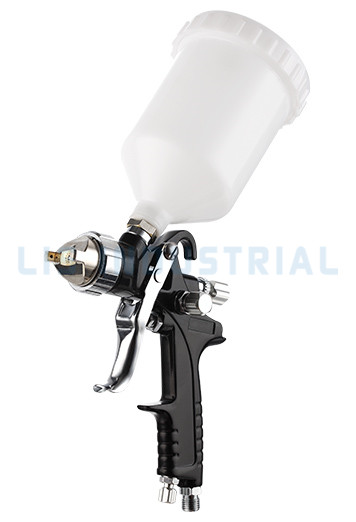
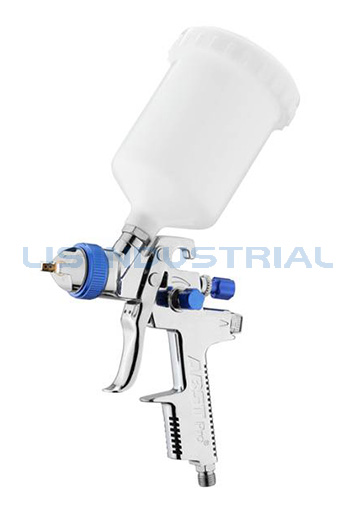
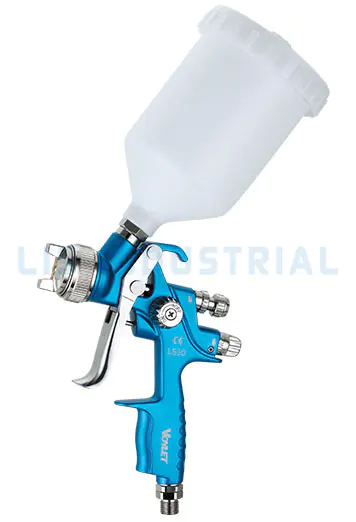
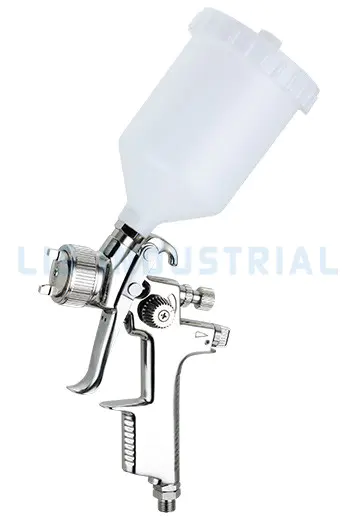
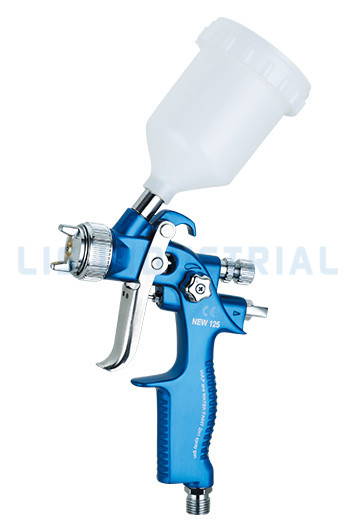
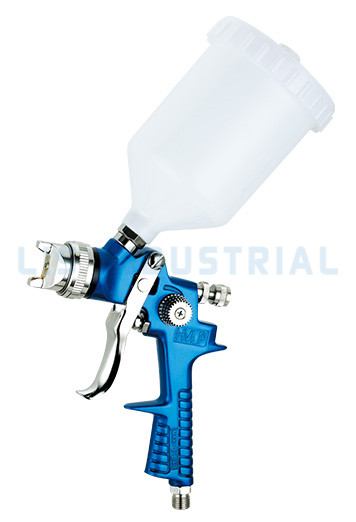
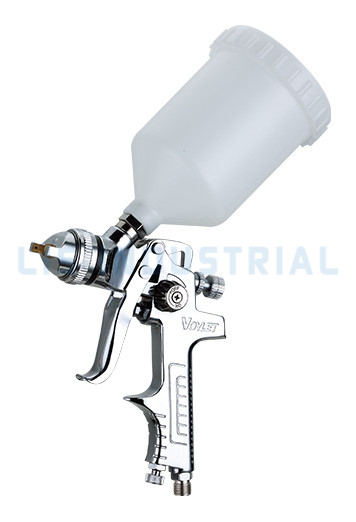
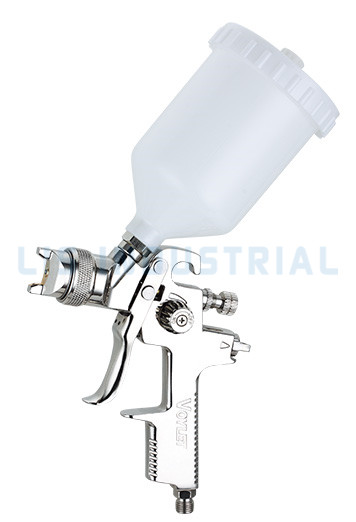
Gravity type (upper pot): The paint tank is located above the spray gun and relies on gravity to feed the material. Suitable for small-area operations, convenient color change, but limited capacity.
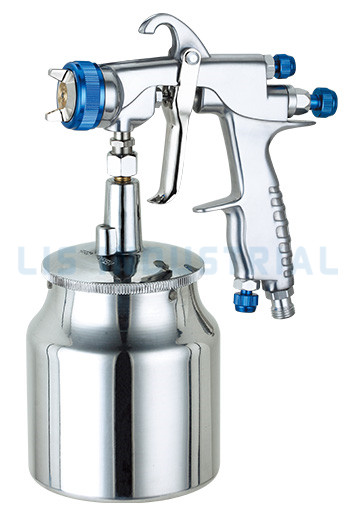
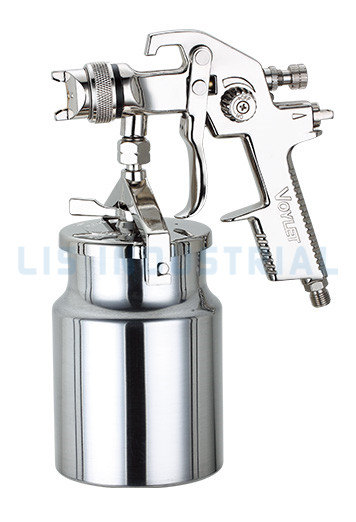
Siphon type (lower pot): The paint tank is located below the spray gun and sucks the material through the Venturi effect. Suitable for medium-viscosity paint, but cleaning is more troublesome.
Pressure delivery: The paint is delivered through an external pressure tank or pump, suitable for continuous large-scale operations, but the equipment cost is relatively high.
Classification by atomization technology
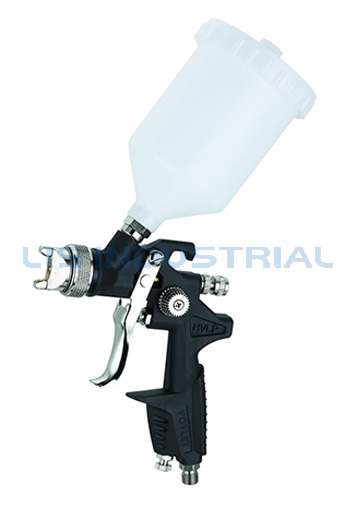
HVLP (high flow and low pressure): large air flow (10-25 CFM), pressure below 0.7 bar, paint transfer efficiency up to 80%, but the spraying speed is slow.
LVLP (low flow and low pressure): balances air consumption and atomization effect, suitable for detail repair, and lower energy consumption.
Mixed air spraying: combines high-pressure paint atomization with auxiliary air, taking into account both efficiency and quality, and is suitable for industrial production lines.
- Advantages of low-pressure spray guns
- Environmental protection and energy saving
Reduce overspray and paint drift, reduce VOC emissions, and comply with environmental regulations.
High paint utilization rate, saving costs.
- High-quality painting
Uniform atomization particles, smooth coating surface, reducing "orange peel" or sagging phenomenon.
Suitable for coatings with high surface requirements such as metallic paint and high-gloss paint.
- Operation-friendly
Small recoil, reducing operator fatigue; low noise, improving the working environment.
- Maintenance and troubleshooting of low-pressure spray guns
Daily maintenance points
Cleaning: Immediately flush the paint channel with solvent after each use to avoid curing blockage. Metal tools are prohibited from cleaning the nozzle. Special brushes and cleaning needles are recommended.
Lubrication: Regularly apply silicone-free lubricating oil to the gun needle and sealing ring.
Inspection: Make sure that the air holes of the hood are not blocked, otherwise it will cause the spray width to be distorted or uneven atomization.
Common faults and solutions
|
Fault phenomenon |
Possible cause |
Solution |
|
Spraying width is S-shaped |
Hood fan-shaped hole is blocked |
Use a cork needle to clear the air hole |
|
Paint dripping |
Gun needle seal ring is worn |
Replace the seal ring and lubricate |
|
Atomization is rough |
Insufficient air pressure or paint is too thick |
Adjust air pressure or dilute paint |